The Top Chinese Metal CNC Machining Partner
We Offer a Variety of Plastic & Others CNC Machining Materials
Struggling to find the right material for your CNC project?
We offer a premium selection of Plastic and Other CNC Machining Materials that cover everything from commodity POM to high-end aerospace grades.
Our Plastics Portfolio includes:
General Engineering: ABS, Polycarbonate (PC), Nylon (PA6/66), and Acrylic (PMMA) for versatile prototyping and end-use parts.
High-Performance Polymers: PEEK, PTFE, POM (Delrin), and PEI (Ultem) for applications requiring high heat resistance, chemical inertness, and superior wear resistance.
ESD-Safe & Conductive Materials: Static-dissipative plastics ideal for electronics manufacturing and cleanroom environments.
Why does material selection matter so much for custom parts?
Choosing the right material for custom parts is critical because it directly impacts performance, cost, manufacturability, and longevity.
Mechanical & Physical Properties
Application Environment
Manufacturing Compatibility
Cost & Lead Time
Surface Finish & Aesthetics
Regulatory & Safety Requirements
Custom Parts with More than 60+ Materials
Provide Various Materials CNC Machining One-Stop Services for Different Industries.
POM CNC machining (polyoxymethylene), also known as Cysteel or Delrin CNC machining, is often used for high-precision parts as its high strength, wear resistance, low coefficient of friction, good fatigue, chemical resistance & dimensional stability. It is suitable for the manufacture of mechanical parts such as gears, bearings, pulleys and valves, POM CNC parts are widely used in automobiles, electronics, industrial equipment and other parts that require high precision and longevity.
Features of POM CNC Machining Materials
| Type | Density (g/cm³) | Tensile Strength (MPa) | Tensile Modulus (GPa) | Heat Deflection Temperature (°C) | Impact strength (kJ/m²) | Hardness (R Scale) | Water Absorption | Thermal Expansion (µm/m°C) | Coefficient of Friction |
| Copolymer POM | 1.41 – 1.42 | 60 – 70 | 2.8 – 3.2 | 110 – 125 | 7 – 10 | 120 – 127 | 0.20 – 0.25 | 8.0 – 10.5 | 0.1 – 0.3 |
| Homopolymer POM | 1.42 – 1.43 | 70 – 80 | 3.0 – 3.5 | 125 – 140 | 6 – 9 | 120 – 127 | 0.20 – 0.25 | 7.5 – 10.0 | 0.1 – 0.3 |
| Lubricated/low-wear POM | 1.45 – 1.55 | 50 – 65 | 2.5 – 3.0 | 100 – 120 | 5 – 8 | 115 – 120 | 0.15 – 0.22 | 9.0 – 11.5 | 0.05 – 0.15 |
| Glass Fiber Reinforced POM | 1.55-1.65 | 70 – 130 | 7.0 – 12.0 | 160 – 170 | 5 – 8 | 115-125 | 0.15 – 0.20 | 3.0 – 5.0 | 0.2-0.35 |
PEEK is a high-performance engineering plastic, suitable for extreme environments due to its resistance to high temperatures (up to 260°C), high strength, chemical resistance, low friction & biocompatibility. PEEK CNC machining parts excels in high-load applications like bearings, gears, seals & other mechanical components, as well as in a wide range of applications in the medical, aerospace & automotive industries.
Features of PEEK CNC Machining Materials
| Type | Density (g/cm³) | Tensile Strength (MPa) | Tensile Modulus (GPa) | Heat deflection temperature (°C) | Impact strength (kJ/m²) | Hardness (R Scale) | Water Absorption | Thermal Expansion (µm/m°C) | Features |
| Pure PEEK | 1.30 – 1.32 | 90 – 110 | 3.6 – 4.0 | 152 – 160 | 7 – 10 | 126 – 132 | 0.10 – 0.15 | 4.5 – 5.5 | Among the PEEK family, it is relatively the easiest to process, featuring excellent toughness, fatigue resistance & comprehensive mechanical properties. |
| PEEKGF30(Glass fiber reinforced) | 1.52 – 1.54 | 160 – 190 | 10 – 13 | 315 – 343 | 9-12 | 124 – 127 | 0.06 – 0.11 | 2.0 – 3.0 | Extremely high rigidity, strength, dimensional thermal stability and creep resistance. |
| PEEKCF30(Carbon fiber reinforced) | 1.40 – 1.42 | 210 – 240 | 18 – 22 | 315 – 343 | 6-9 | 125 – 128 | 0.04 – 0.08 | 1.2 – 2.0 | The king of specific strength/specific stiffness, naturally antistatic/conductive, with extremely low thermal expansion. |
| PEEKHT(High temperature grade) | 1.31-1.33 | 95-105 | 3.8-4.2 | 200-220 | 40-50 | 85-87 | 0.1-0.2 | 4.5 – 5.5 | In a long-term high-temperature of 260-300°C, it has a stronger resistance to thermal oxidation degradation & the highest retention rate of mechanical properties. |
| Filled with PTFE/ graphite PEEK | 1.34 – 1.45 | 70 – 90 | 4.0 – 5.5 | 152 – 160 | 5-8 | 120 – 125 | 0.08 – 0.12 | 4.0 – 6.0 | It has an extremely low coefficient of friction, a long wear-resistant service life, achieve oil-free lubrication. |
PMMA material known as acrylic or Plexiglas, is widely used in optical lenses, display panels, lampshades, and other high-transparency applications due to its excellent transparency, weathering resistance, high hardness, scratch-resistance, light weight and processability, making it suitable for electronics, automotive, medical equipment, architectural decoration industries, meeting the demands for aesthetics, durability and light weight. PMMA CNC machining parts are suitable for electronics, automotive, medical equipment and architectural decoration fields.
Features of PMMA CNC Machining Materials
| Type | Density (g/cm³) | Tensile Strength (MPa) | Tensile Modulus (MPa) | Heat deflection temperature (°C) | Impact strength (kJ/m²) | Hardness (R Scale) | Water Absorption | Thermal Expansion (µm/m°C) | Optical transmittance |
| Casting PMMA | 1.18 – 1.20 | 65 – 75 | 3100 – 3300 | 95 – 105 | 1.5 – 2.0 | 95 – 105 | 0.3% – 0.4% | 6.0 – 8.0 | 92%-93% |
| Extruded PMMA | 1.17 – 1.19 | 60 – 70 | 3000 – 3200 | 85 – 95 | 1.0 – 1.8 | 90 – 100 | 0.3% – 0.4% | 7.0 – 9.0 | 90%-92% |
| High Impact PMMA | 1.18-1.20 | 55-65 | 2800-3100 | 80-95 | 8.0 – 25.0+ | 85-100 | 0.3% – 0.5% | 7.0 – 10.0 | 85%-91% |
| UV Stabilized PMMA | 1.19-1.20 | 60-70 | 3000-3300 | 85-100 | 1.5 – 2.5 | 90-105 | 0.3% – 0.4% | 6.0 – 8.0 | 91%-92% |
ABS material is suitable for the manufacture of complex geometric parts as its excellent mechanical properties, impact resistance, toughness, and heat resistance. ABS material is easy to cut, has a smooth surface, easy to color and paint. ABS CNC machining parts commonly used in automotive parts, electronic housings & home appliances. Its insulating properties also make it suitable for electrical equipment.
Features of ABS CNC Machining Materials
| Type | Density (g/cm³) | Tensile Strength (MPa) | Tensile Modulus (MPa) | Heat deflection temperature (°C) | Impact strength (kJ/m²) | Hardness (R Scale) | Water Absorption | Thermal Expansion (µm/m°C) |
| General-purpose ABS | 1.04 – 1.06 | 40 – 47 | 2200 – 2500 | 85 – 95 | 20 – 30 | 105 – 115 | 0.20% – 0.45% | 6.5 – 9.5 |
| High-impact ABS | 1.03 – 1.05 | 35 – 42 | 1900 – 2200 | 85 – 95 | 35 – 50 | 100 – 110 | 0.25% – 0.50% | 7.0 – 10.0 |
| ABS Flame Retardant Grade | 1.08-1.10 | 30- 40 | 1400-1900 | 80-95 | 10-20 | 80-95 | 0.15% – 0.35% | 7.5 – 11 |
| Heat-resistant/electroplated grade ABS | 1.03 – 1.07 | 45 – 52 | 2300 – 2600 | 95 – 105 | 15 – 25 | 110 – 118 | 0.10% – 0.25% | 6.0 – 8.5 |
Nylon /PA CNC machining due to its excellent wear resistance, high tensile strength, toughness and low coefficient of friction. Nylon’s chemical resistance, mechanical strength and durability, low water absorption, shape stability, low friction and self-lubricating properties make it suitable for sliding parts such as gears, bearings, and slides, making it ideal for wear-resistant and durable parts in industrial, automotive, and electronic applications.
Features of Nylon/PA CNC Machining Materials
| Type | Density (g/cm³) | Tensile Strength (MPa) | Tensile Modulus (GPa) | Heat deflection temperature (°C) | Impact strength (kJ/m²) | Hardness (R Scale) | Water Absorption | Thermal Expansion (µm/m°C) | Coefficient of friction |
| PA6 | 1.13 – 1.15 | 45 – 80 | 2.0 – 3.0 | 55 – 70 | 5 – 10 | 110 – 118 | 1.6 – 2.0 | 8.0 – 9.0 | 0.2-0.25 |
| PA66 | 1.14 – 1.16 | 70 – 90 | 2.5 – 3.5 | 70 – 90 | 4 – 8 | 118 – 125 | 1.2 – 1.6 | 8.0 – 9.0 | 0.2-0.25 |
| 30% glass fiber reinforced PA6/PA66 | 1.35 – 1.45 | 120 – 200 | 7.0 – 12.0 | 210 – 250 | 8 – 15 | 120 – 125 | 0.7 – 1.2 | 2.5 – 4.0 | 0.3-0.35 |
| PA12 | 1.01 – 1.02 | 45 – 55 | 1.4 – 1.8 | 55 – 60 | 7-12 | 60-70 | 0.25 – 0.35 | 9-12 | 0.3-0.35 |
Polypropylene /PP is a widely used engineering plastic, favored in CNC machining for its low weight, chemical resistance, impact strength, and excellent processability. It performs well in acid, alkali, and corrosive environments, making it a common choice for automotive parts, electronic equipment, laboratory apparatus, and chemical containers. Thanks to its low density and good toughness, PP is ideal for lightweight applications while remaining stable in chemically aggressive conditions. These attributes make it an affordable and versatile plastic material.
Features of PP CNC Machining Materials
| Type | Density (g/cm³) | Tensile Strength (MPa) | Tensile Modulus (GPa) | Heat deflection temperature (°C) | Impact strength (kJ/m²) | Hardness (R Scale) | Water Absorption | Thermal Expansion (µm/m°C) | Features |
| Homo-PP | 0.90 – 0.91 | 30 – 38 | 1.3 – 1.8 | 100 – 110 | 3-6 | 95 – 105 | < 0.01 | 11-16 | Extremely low density and cost Outstanding chemical resistance Good fatigue strength Extremely low water absorption rate |
| Co-PP | 0.90 – 0.91 | 25 – 32 | 1.0 – 1.5 | 90 – 105 | 8 – 20+ | 85 – 95 | < 0.01 | 11 – 16 | It has the best rigidity, strength and heat resistance, but becomes brittle at low temperatures |
| PP-GF30 | 1.04- 1.23 | 70 – 100 | 4.0 – 7.0 | 130 – 155 | 6-10 | 100 – 110 | < 0.05 | 3-5 | Significantly enhance rigidity, strength and heat resistance, and reduce shrinkage and thermal expansion |
| PP/EPDM | 0.89 – 0.91 | 15 – 25 | 0.5 – 1.0 | 80 – 95 | No break | 70 – 85 | < 0.01 | 12-18 | Elastomer modification, with the highest toughness, is used in extreme impact resistance scenarios |
HDPE is a popular choice for CNC machining due to its excellent chemical resistance, impact strength, low water absorption, and abrasion resistance. Its toughness and low density make it suitable for lightweight, high-strength parts, especially in corrosive environments such as chemical processing, food processing, and water treatment. HDPE is easy to machine and is commonly used for tanks, pipeline linings, gears, and sliding components. The combination of abrasion resistance and low friction makes it a highly effective engineering plastic.
Features of HDPE CNC Machining Materials
| Type | Density (g/cm³) | Tensile Strength (MPa) | Tensile Modulus (GPa) | Heat deflection temperature (°C) | Impact strength (kJ/m²) | Hardness (R Scale) | Water Absorption | Thermal Expansion (µm/m°C) | Features |
| HDPE 500 | 0.945 – 0.955 | 22 – 30 | 0.8 – 1.1 | 75 – 85 | No break | 50 – 60 | < 0.01 | 13 – 18 | Good cost performance and balanced overall performance. It is easy to obtain various profiles |
| HDPE 1000 | 0.955 – 0.962 | 25 – 32 | 1.0 – 1.3 | 80 – 90 | No break | 55 – 65 | < 0.01 | 12-16 | The best processability in the HDPE family. Better hardness, wear resistance and dimensional stability. |
| HDPE UV-Stabilized | 0.945-0.962 | 25-35 | 1.0 – 1.2 | 60-70 | No break | 65-70 | < 0.01 | 10-15 | It resists ultraviolet aging in outdoor environments and extends its lifespan by more than 5 to 10 times |
| UHMW-PE | 0.928 – 0.940 | 30 – 45 | 0.5 – 0.8 | 80 – 90 | No break | 40 – 55 | < 0.01 | 15 – 20 | The best wear resistance, impact resistance and self-lubrication among all plastics |
PC (Polycarbonate) CNC machining parts for its impact resistance, transparency, heat resistance, and dimensional stability. Its optical clarity combined with high impact strength makes it well-suited for frequently used parts where visual appearance matters. PC also offers good heat and UV resistance, making it a common choice for high-strength applications such as automotive parts, electronic housings, optical lenses, and protective covers.
Features of PC CNC Machining Materials
| Density (g/cm³) | Tensile Strength (MPa) | Tensile Modulus (GPa) | Heat deflection temperature (°C) | Impact strength (kJ/m²) | Hardness (R Scale) | Water Absorption | Thermal Expansion (µm/m°C) | Optical transmittance |
| 1.20 – 1.22 | 55 – 70 | 2.2 – 2.4 | 127 – 132 | 15 – 25 | 118 – 123 | 0.12 – 0.18 | 6.5 – 7.0 | 88 – 91 |
| 1.20 – 1.22 | 60 – 75 | 2.3 – 2.4 | 127 – 132 | 25 – 60+ | 118 – 123 | 0.12 – 0.18 | 6.5 – 7.0 | 88 – 91 |
| 1.25 – 1.45 | 80 – 130 | 4.0 – 9.0 | 132 – 145 | 8-15 | 120 – 125 | 0.09 – 0.15 | 2.5 – 4.5 | non-transparent |
| 1.10 – 1.20 | 45 – 60 | 1.8 – 2.5 | 105 – 115 | 25 – 50 | 105 – 115 | 0.20 – 0.30 | 7.0 – 9.0 | non-transparent |
| 1.20 – 1.25 | 55 – 65 | 2.2 – 2.4 | 125 – 130 | 15 – 20 | 118 – 123 | 0.12 – 0.18 | 6.5 – 7.0 | Semi-transparent/opaque |
Carbon fiber is a lightweight, high-strength composite material widely used in aerospace, automotive, and electronics industries. It offers excellent corrosion resistance, thermal stability, and a favorable combination of strength and rigidity. These properties make it particularly suitable for high‑precision components, lightweight structural designs, and applications in high‑temperature environments.
Features of Carbon Fiber CNC Machining Materials
| Type | Density (g/cm³) | Tensile Strength (MPa) | Tensile Modulus (GPa) | Interlaminar shear strength | Continuous operating temperature (°C) | Thermal Expansion (µm/m°C) | Features |
| Standard 3K carbon fiber(Epoxy resin) | 1.50 – 1.60 | 500 – 700 | 120 – 180 | Medium | 80-120 | 2 – 4 | Classic “checkered” pattern. Fibers are interwoven at 0 °/90 ° to achieve balanced performance. |
| High modulus carbon fiber(Epoxy resin) | 1.6 – 1.7 | 1000 – 1500 | 250 – 400 | Medium | 80-120 | -1 – 1 | Extreme stiffness and thermal stability, high processing difficulty and cost |
| Unidirectional carbon fiber board | 1.5-1.55 | 0°direction: 1500 – 2500 90°direction: 50 – 70 | 0°direction: 120 – 140 90°direction: 8 – 10 | Low | 80-120 | 0°direction: 0 – 2 90°direction: 20 – 30 | The surface shows single directional stripes. |
| Carbon Fiber Reinforced Polymer (CFRP) | 1.5-2.0 | 3500 | 230-450 | High | 120-180°C | -1 – 2 | CFRP sheets can be accurately made into parts that cannot meet the requirements of “extremely light, extremely rigid, and extremely stable” simultaneously with any other material. |
Glass fiber reinforced plastic (GFRP) is a lightweight, high-strength composite material with excellent corrosion resistance and electrical insulation, making it widely used in CNC machining. It is suitable for manufacturing chemically resistant parts, electrical insulators, and lightweight structural components. Thanks to its good hardness, toughness, and processability, GFRP is commonly used for structural parts and housings. When combined with reinforcing agents such as epoxy or phenolic resins, it offers enhanced impact resistance and thermal stability, further broadening its applicability.
Features of Glass Fiber CNC Machining Materials
| Type | Density (g/cm³) | Tensile Strength (MPa) | Tensile Modulus (GPa) | Heat deflection temperature (°C) | Impact strength (kJ/m²) | Hardness (R Scale) | Water Absorption | Thermal Expansion (µm/m°C) | Dielectric strengthb (kV/mm) |
| Epoxy fiberglass board(G10, FR-4, GPO-3) | 1.7 – 1.9 | 300 – 450 | 20 – 25 | >130 | 30 – 60 | M100 – M110 | 0.1 – 0.3 | 1.0 – 1.5 | >20 |
| Polyester resin fiberglass board | 1.7 – 1.9 | 60 – 120 | 8 – 15 | >200 | 15 – 40 | M90 – M105 | 0.1 – 0.5 | 1.5 – 2.5 | >15 |
| Glass Fiber Reinforced Polymer (GFRP) | 1.80 – 2.10 | 1000 – 1500 | 35-70 | 120-180 | high | high | 0.1-1.0 | 6 – 10 | high |
There are also other materials that can be used for machining, such as rubber, wood, ceramics, phenolic and various other polymer matrix composites materials, etc.
Features of PMCs & Others CNC Machining Materials
| Type | Density (g/cm³) | Tensile Strength (MPa) | Tensile Modulus (GPa) | Heat resistance℃ | Thermal Expansion (µm/m°C) |
| PPS | 1.35 – 1.42 | 40 – 90 | 2.5 – 3.5 | 110 – 135 | ~55 |
| PPS+Glass Fiber Reinforced | 1.60 – 1.70 | 145 – 190 | 12 – 14 | >260 (1.82 MPa) | 20 – 30 |
| PPS+Carbon Fiber Reinforced | 1.40 – 1.50 | 165 – 210 | 13 – 28 | 260 – 270 | 10 – 15 |
| PEI | 1.27 | 105 – 110 | 2.5 – 3.3 | 190 – 210 (1.82 MPa) | 45 – 55 |
| PEI+Glass Fiber Reinforced | 1.42 – 1.55 | 120 – 170 | 8.5 – 11.0 | ~210 (1.82 MPa) | 20 – 30 |
| PEI+Carbon Fiber Reinforced | 1.40 – 1.50 | 200 – 240 | 17 – 23 | >215 (1.82 MPa) | 10-20 |
Blog & News
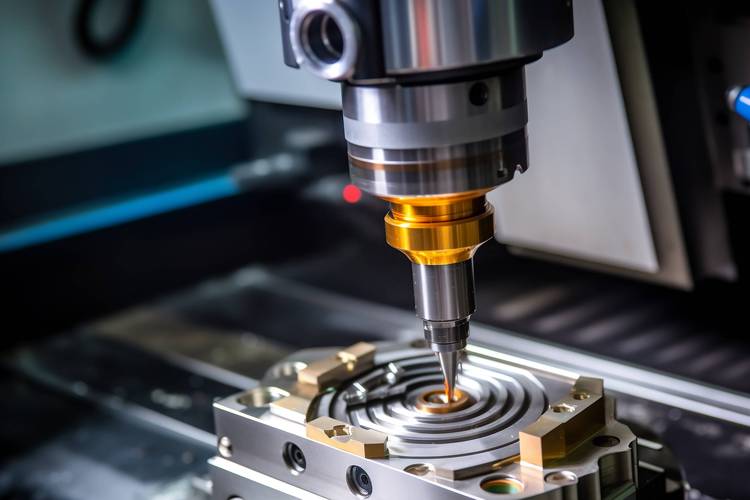
What is a CNC Machining Center?
A CNC machining center is an advanced, computer-controlled machine tool capable of performing multiple machining operations—such as milling, drilling, tapping, boring, and sometimes turning.
Ashely . March 9, 2026
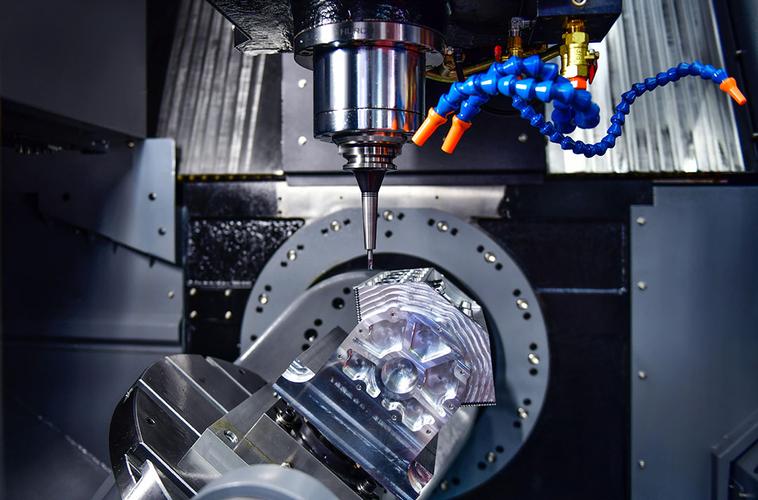
How many kinds of Types in CNC Machining Centers?
There are at least 5 different CNC lathes type in Machining Centers: Vertical Machining Center, Horizontal Machining, 5-Axis Machining Center, Gantry / Bridge Mill, Turn-Mill Center (Multi-Tasking).
Ashely . March 9, 2026
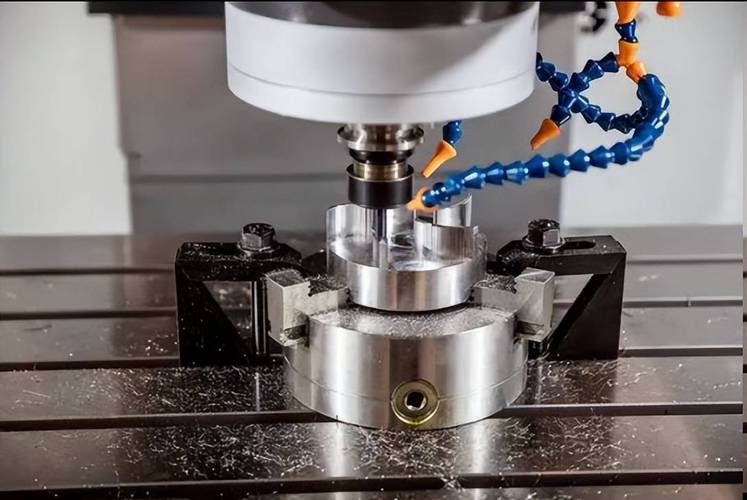
What is CNC Machining?
CNC (Computer Numerical Control) machining is a subtractive manufacturing process in which pre-programmed computer software controls the movement of factory tools and machinery to remove material from a solid workpiece, creating a finished part or product.
Ashely . March 9, 2026
Would you like to start a project with us?
FAQs About Plastic & Others CNC Machining Materials
What are the most common plastic materials used in CNC machining?
ABS,POM (Delrin / Acetal),PEEK,PC (Polycarbonate) ,PTFE (Teflon),Nylon (PA6/66)
What is your quality control system?
We operate under a rigorous Quality Management System (QMS) aligned with ISO standards. Our 5 Steps QC process is including IQC (Incoming Quality Control) , FQC (Final Quality Control) , OQC (Outgoing Quality Control) for routine production.
QE (Quality Engineering) / CAPA (Corrective and Preventive Actions) implemented throughout the entire product lifecycle, especially during the post-sale stage, to drive continuous improvement. Simply speaking 100% inspection before shipment to ensure zero defects.
What kind of quality assurance or warranty do you offer on orders?
One of the reasons engineers purchase from RPD is that we take on all the risks for you. We guarantee you’ll love what you get. Not happy with it? We’ll either redo it or give you a full refund. Your purchase is completely risk-free.
What GD&T callouts should I use (or avoid) for plastic CNC parts?
Geometric Dimensioning and Tolerancing (GD&T) is essential, but over-specifying it can turn a simple part into an expensive one. Here’s our practical guide:
Cost-Effective to Specify: Flatness, Straightness, and Perpendicularity (within reasonable limits) — these are natural outcomes of good machining and rarely require special setups.
Use with Caution: True Position (especially with a tight tolerance zone like Ø0.05mm) — this often requires CMM inspection and may need secondary operations.
Avoid if Possible: Concentricity and Profile of a Surface (complex compound curves) — these can be difficult to measure reliably on plastics due to material flexibility and thermal variation.
Which kind of file formats can I send for plastic cnc machining production?
We accept STEP, IGES, STL, DWG, DXF, and other common CAD formats.
How do you inspect plastic parts to ensure they meet specifications?
We match inspection methods to tolerance requirements—over-inspecting drives up cost, under-inspecting risks quality. Our toolkit includes calipers (±0.02mm), optical projectors (±0.005mm), CMM (±0.0025mm), go/no-go gauges (pass/fail), and granite plate setups (±0.005mm) for geometry validation.