
The Top Chinese Metal CNC Machining Partner
We Offer a Variety of Metal Materials for CNC Machining
We supply a comprehensive range of industrial‑grade metal materials to support your custom CNC machining projects. Whether you need lightweight aluminum, high‑strength steel, corrosion‑resistant stainless steel, wear‑resistant brass or copper alloys, we have material stock ready for rapid turnaround.
Our engineering team will assist you with metal material selection based on working environment, mechanical performance requirements, weight budget and cost targets. We produce precision CNC machined metal components for automotive, robotics, medical equipment, aerospace fixtures and industrial automation industries.
From prototype one‑offs to high‑volume production runs, all raw metals comply with international material standards.
Why does material selection matter so much for custom parts?
Choosing the right material for custom parts is critical because it directly impacts performance, cost, manufacturability, and longevity.
Mechanical & Physical Properties
Application Environment
Manufacturing Compatibility
Cost & Lead Time
Surface Finish & Aesthetics
Regulatory & Safety Requirements
Custom Parts with More than 80+ Materials
Provide Various Materials CNC Machining One-Stop Services for Different Industries. For quick CNC material selection, click here.
Aluminum is most used materials in CNC machining, thanks to its light weight, high strength and corrosion resistance & It has excellent machinability. It is suitable for precision machining and complex designs, and is commonly used in aerospace, automotive, robot, electronics, medical devices & other industries. The main models are 6061, 7075, 5052, 2024, etc.
Features of Aluminum CNC Machining Materials
| Type | Density (g/cm³) | Tensile Strength (MPa) | Hardness (Brinell) | Yield Strength (MPa)0.2% | Elongation rate(50m gauge length) | Thermal Conductivity | Thermal Expansion (µm/m°C) | Features |
| 6061-T6 | 2.7 | 310-350 | 95 HB | 240-276 | 12-17 | 167 | 23.6 | “Universal aluminum” It has excellent comprehensive performance, with outstanding strength, corrosion resistance, weldability and formability. Most commonly used and most accessible. |
| 7075 | 2.81 | 510-570 | 150 HB | 460-503 | 9-11 | 130 | 23.6 | “High-strength aluminum”. It has the highest strength, but its corrosion resistance and weldability are average. |
| 2024 | 2.78 | 420-470 | 100 HB | 290-345 | 12-20 | 121 | 23.2 | “High fatigue strength aluminum”. It has high strength and good fatigue performance, but poor corrosion resistance and is often covered with a pure aluminum layer called “Alclad”. |
| 5052 | 2.68 | 228-260 | 60 HB | 150-195 | 12-18 | 138 | 23.8 | Highly corrosion-resistant and highly formable aluminum. It cannot be strengthened by heat treatment, has medium strength, but is resistant to corrosion, especially seawater, and has excellent formability. |
| 5083 | 2.66 | 275-350 | 75 HB | 215-255 | 12-16 | 117 | 23.8 | “Ship-grade aluminum”. It cannot be heat-treated, has a strength higher than 5052, excellent resistance to seawater corrosion, and good weldability. |
| 6063 | 2.7 | 190-240 | 80 HB | 170-210 | 10-12 | 210 | 23.4 | “King of Extrusion” It has excellent extrusion fluidity, is easy to be anodized and colored, and its strength is slightly lower than that of 6061. |
| 6082 | 2.71 | 260-340 | 100 HB | 250-300 | 10-14 | 155 | 23.5 | The most commonly used “6061” in Europe. Its performance is very similar to that of 6061, but its strength is slightly higher. |
| 2011 | 2.83 | 310-380 | 100 HB | 200-295 | 12-16 | 151 | 22.9 | “Free-cutting aluminum”. It contains lead and bismuth, forming tiny particles. It has excellent machinability, short and fragmented chips, and a high surface finish. |
| 7050 | 2.82 | 510-540 | 145 HB | 455-490 | 10-12 | 157 | 23.5 | “High Toughness 7 Series” While maintaining the high strength of 7075, it has better resistance to stress corrosion and fracture toughness. |
| 7068 | 2.85 | 610-640 | 160 HB | 570-590 | 8-11 | 115 | 23.9 | The highest strength commercial aluminum alloy, with a strength slightly higher than 7075 |
The steel cnc machining processing technology is mature and widely applied. Steel is widely used in CNC machining for its high strength, wear resistance and good machinability, suitable for tools, machine parts, structural supports and etcs in high stress environments. Commonly used models are such as 1018, 1045, 4140, etc.
Features of Common Steel CNC Machining Materials
| Type | Density (g/cm³) | Tensile Strength (MPa) | Hardness (Brinell) | Yield Strength (MPa)0.2% | Elongation Rate (50m gauge length) | Thermal Conductivity | Thermal Expansion (µm/m°C) | Features |
| 1045 | 7.84 | 700-850 | 170-210 HB | 450-530 | 12-16 | 50.2 | 11.3 | A good balance between strength and processability. Adjustable quality treatment, high cost performance. |
| A36 | 7.85 | 400-550 | 130 HB | 250-350 | 20-25 | 50 | 11.8 | High performance, with extremely low cost, excellent process-friendliness (easy to process and weld), and wide availability |
| 4140 | 7.85 | 850-1000 | 200-300 HB | 650-850 | 15-20 | 42.7 | 12.3 | “Universal alloy steel” It has excellent comprehensive performance in terms of strength, toughness & fatigue strength & good hardenability. The most widely used alloy steel. |
| 4340 | 7.85 | 980-1280 | 250-350 HB | 745-1100 | 12-15 | 38 | 12.5 | The top combination of strength and toughness. It has excellent hardenability. |
| 1018 | 7.87 | 440-550 | 126 HB | 290-350 | 15-25 | 51.9 | 11.7 | The lowest cost, easy to machine and excellent weldability. |
| 1144 | 7.84 | 760-900 | 170-220 HB | 470-550 | 12-15 | 49.8 | 11.5 | “Brass in steel” Adding sulfur/lead, it has excellent chip breaking, high surface finish, long tool life and extremely high processing efficiency. |
| 8620 | 7.85 | 500-650 | 149-200 HB | 380-450 | 20-25 | 46.6 | 12.1 | The core has good toughness and the surface can be hardened. It is easy to undergo carburizing/nitriding to obtain a hard & wear-resistant surface layer & a tough core |
The steel cnc machining processing technology is mature and widely applied. Stainless steel is widely used in CNC machining for medical, food processing, automotive parts and building structures due to its excellent corrosion resistance, strength, heat resistance and machinability. Commonly used types like SS303, SS304, SS316, SS316L and etc.
Features of Stainless Steel CNC Machining Materials
| Type | Density (g/cm³) | Tensile Strength (MPa) | Hardness (Brinell) | Yield Strength (MPa)0.2% | Elongation Rate(50m gauge length) | Thermal Conductivity | Thermal Expansion (µm/m°C) | Features |
| SS304/SS304L | 7.93 | 515-620 | 150-200 HB | ≥205 | 40-50 | 16.2 | 17.2 | Robust, versatile in hardness, supports a broad range of industrial applications. |
| SS316/SS316L | 7.98 | 515-620 | 150-200 HB | ≥205 | 40-50 | 16.3 | 16 | It is an indispensable material in corrosive environments containing chloride ions, and its corrosion resistance advantage is irreplaceable. |
| SS303 | 8.03 | 540-655 | 160-190 HB | ≥205 | 35-50 | 16.2 | 17.2 | Stainless steel has the best machinability. Adding sulfur/selenium makes the chips break easily, the tool life longer, the surface finish better and the efficiency higher. |
| SS2205 | 7.8 | 655-795 | 290 HB | ≥450 | ≥25 | 19 | 13.7 | High strength is twice that of 304, excellent resistance to stress corrosion. The processed parts have a high load-bearing capacity. |
| SS416 | 7.75 | 515-690 | ≤217 HB | ≥275 | ≥20 | 24.9 | 9.9 | Martensite has the best machinability. It is easy to machine, has good machining performance before heat treatment, and can achieve a good surface finish. |
| SS17-4 PH | 7.75 | 930-1100 | 300 | 600-750 | ≥10 | 18 | 18 | “Processing-friendly” ultra-high strength materials. |
| SS420 | 7.7 | ≥655 | ≤ 217 HB | ≥345 | ≥15 | 24.9 | 10.3 | It has excellent high-temperature oxidation resistance and sulfidation resistance, and is suitable for high-temperature environments. |
| SS440C | 7.7 | ≥760 | ≤ 255 HB | ≥450 | ≥2 | 24.2 | 10.2 | It has the highest hardness and wear resistance among stainless steels and is extremely difficult to process. |
| SS446 | 7.8 | 450-600 | 200 | 200-300 | 15-25 | 20 | 14.5 | It has excellent high-temperature oxidation resistance and sulfidation resistance, and is suitable for high-temperature environments. |
Brass CNC machining to make highly corrosion-resistant, electrically, thermally conductive parts & easily machinable say plumbing fittings, electronic connectors and decorative parts. Its soft texture, anti-bacterial and wear-resistant, easy to process complex structures, and the finished product has an elegant golden appearance. Commonly used type include C360, C260, C385 & etc.
Features of Brass CNC Machining Materials
| Type | Density (g/cm³) | Tensile Strength (MPa) | Hardness (Brinell) | Yield Strength (MPa)0.2% | Elongation Rate(50m gauge length) | Thermal Conductivity | Thermal Expansion (µm/m°C) | Features |
| C36000 | 8.5 | 340-470 | 65-90 HRB | 145-310 | 18-30 | 115 | 20.5 | One of the best machinability among all metallic materials. It contains about 3% lead, minimal tool wear & an extremely high surface finish, allowing for high-speed machining. |
| C37700 | 8.53 | 350-500 | 90 HRB | 150-250 | 25-40 | 110 | 20 | The cutting performance is extremely close to brass C36000, featuring an excellent surface finish, high strength and good toughness, as well as outstanding corrosion and wear resistance. |
| C46400 | 8.41 | 380-550 | 80-110 HRB | 170-380 | 30-45 | 100 | 20.4 | Good processability, outstanding resistance to seawater corrosion, known as naval brass. Adding about 1% tin significantly enhances the resistance to dezincification corrosion and seawater erosion. |
| C22000 | 8.78 | 310- 420 | 75 HRB | 120-200 | 40 – 50 | 120 | 21 | The high copper content brings excellent appearance and corrosion resistance: it is warm golden in color, often used in decorative parts & has good electrical and thermal conductivity. |
| C26000 | 8.39 | 300-550 | 55-100 HRB | 170-250 | 45-55 | 120 | 20 | Outstanding comprehensive performance: Good strength, ductility, corrosion resistance and cold working formability. |
| C28000 | 8.39 | 340-500 | 60-95 HRB | 120-350 | 40 – 50 | 115 | 20.8 | The balance between cost and performance. It has a higher zinc content, and its price is usually lower than that of C26000. |
| C48500 | 8.5 | 420-580 | 85-110 HRB | 200-400 | 15-25 | 105 | 20.5 | The strength has been enhanced on the basis of being easy to machine. Higher mechanical properties can be achieved by adjusting the composition. |
Bronze has strong, excellent corrosion, wear resistance & high hardness properties, particularly in marine environments, Its excellent anti-friction properties make it suitable for high loads and friction environments. Bronze is widely used in CNC machining for marine fittings, bearings, gears. Common types include C93200, C95400 etc.
Features of Bronze CNC Machining Materials
| Type | Density (g/cm³) | Tensile Strength (MPa) | Hardness (Brinell) | Yield Strength (MPa)0.2% | Elongation Rate(50m gauge length) | Thermal Conductivity(W/m·K) | Thermal Expansion (µm/m°C) | Features |
| C93200 | 8.93 | 240-330 | 60-80 HRB | 140-170 | 10-20 | 58.6 | 18 | It contains lead, has excellent chip breaking performance, causes minimal tool wear and ensures a high surface finish. Excellent bearing performance, self-lubricating and fatigue-resistant. |
| C54400 | 8.86 | 300-690 | 65-100 HRB | 130-550 | 15-30 | 84 | 17.8 | High strength, high elasticity, excellent corrosion resistance and fatigue strength. |
| C63000 | 7.64 | 550-830 | 85-110 HRB | 250-550 | 12-20 | 59 | 16.2 | One of the strongest bronzes, comparable to many steels. Excellent wear resistance and load-bearing capacity. |
| C95400 | 7.45 | 550-760 | 85-110 HRB | 240-480 | 10-18 | 42 | 16 | It has the highest strength, excellent wear resistance and outstanding corrosion resistance, especially resistant to seawater and acids. Impact-resistant and spark-resistant. |
| C90700 | 8.8 | 400-600 | 100 HRB | 150-250 | 15-25 | 60 | 19.5 | The exposed surface has extremely high compressive strength & load-bearing capacity, making it highly suitable for manufacturing heavy-duty low-speed bearings & wear-resistant bushings. Good corrosion resistance & dimensional stability |
| C51000 | 8.9 | 500-600 | 120 HRB | 200-300 | 25-30 | 70 | 19 | The processed surface is extremely smooth and dense, with excellent elastic limit and fatigue strength. |
Copper/pure copper cnc machining is widely used in electrical and electronic components, radiators and other fields due to its excellent electrical and thermal conductivity and corrosion resistance. Copper is soft, easy to process, with high surface finish, suitable for high-precision machining. Commonly type say C110, C101 and etc.
Features of Copper CNC Machining Materials
| Type | Density (g/cm³) | Tensile Strength (MPa) | Hardness (Brinell) | Yield Strength (MPa)0.2% | Elongation Rate(50m gauge length) | Thermal Conductivity | Thermal Expansion (µm/m°C) |
| C11000 | 8.94 | 220-360 | 40-100 HRB | 33-345 | 45-50 | 391 | 17 |
| C10200 / C10100 | 8.94 | 220-360 | 40-100 HRB | 33-345 | 45-50 | 391 | 17 |
| C12000 | 8.8.96 | 250-350 | 40-55 HRB | 80-150 | 40-60 | 380 | 16.3 |
| C14500 | 8.94 | 240-420 | 60-100 HRB | 70-380 | 15-45 | 350 | 17.2 |
| C14700 | 8.94 | 240-420 | 60-100 HRB | 70-380 | 15-45 | 350 | 17.2 |
| C17500 | 8.25 | 900-1100 | 180-230 HRB | 600-800 | 5-15 | 120 | 16.2 |
Titanium CNC machining in aerospace, medical implants, robot, and automotive high-performance parts due to its high strength, light weight, corrosion and heat resistant properties. Its high biocompatibility and strength-to-weight ratio make it particularly suitable for demanding applications, and commonly use type are Ti-6Al-4V (Grade 5) and Grade 2.
Features of Titanium CNC Machining Materials
| Type | Density (g/cm³) | Tensile Strength (MPa) | Hardness (Brinell) | Yield Strength (MPa)0.2% | Elongation Rate(50m gauge length) | Thermal Conductivity | Thermal Expansion (µm/m°C) | Features |
| CP-2 / Grade2 | 4.51 | 370-550 | 160-200 | 230-300 | 20-30 | 21.9 | 8.5 | 1.It is easy to form relatively. 2. It has the best corrosion resistance and relatively low cost. 3. It is a biocompatible standard material. |
| Grade3 | 4.5 | 550-620 | 210-250 | 480-560 | 20-25 | 21.7 | 8.5 | 1. The highest strength grade among pure titanium, excellent corrosion resistance. 2. good plasticity, biocompatibility meets the standards for implants. |
| Grade5(Ti-6Al-4V) | 4.43 | 900-1100 | 330-350 | 800-1000 | 10-15 | 7.6 | 8.6 | It has the best comprehensive performance in terms of strength, toughness and corrosion resistance, and most widely used. |
| Grade5(Ti-6Al-4VELI) | 4.43 | 1000-1200 | 340-360 | 900-1100 | 15-18 | 7.6 | 8.6 | Its strength is slightly lower than Gr.5, but it has better fracture toughness & fatigue strength, used for critical implants. |
| Grade23(Ti-6Al-4VELI) | 4.43 | 860-1000 | 350-375 | 790-950 | 15-20 | 7.6 | 8.6 | 1.Biocompatibility. 2. A perfect high strength & high toughness. 3. Excellent fatigue performance& used for load-bearing implants. 4. The processed parts have unparalleled reliability and service life, especially suitable for long-term service in the human body. |
| Ti-3Al-2.5V (Gr.9) | 4.48 | 460-620 | 250 HB | 550-700 | 15-20 | 7.3 | 9.4 | It has better cold formability and weldability than Gr.5, and moderate strength. It is the first choice for hydraulic pipe materials. |
Zinc CNC machining use in the electronics, automotive and construction industries as its excellent castability, corrosion resistance & economy. Zinc alloy has good impact resistance & dimensional stability, which suitable for complex parts and thin-walled structures, commonly types are Zamak3, Zamak5 and ZA-8, etc.
Features of Zinc CNC Machining Materials
| Type | Density (g/cm³) | Tensile Strength (MPa) | Hardness (Brinell) | Yield Strength (MPa)0.2% | Elongation Rate(50m gauge length) | Thermal Conductivity | Thermal Expansion (µm/m°C) | Features |
| Zamak 3 | 6.6 | 280 – 330 | 82 – 86 HB | 215 – 230 | 10-15 | 113 | 27 | 1. Best casting fluidity and high dimensional accuracy. 2. Excellent machinability & good surface finish. 3. Low cost and the widest application. |
| Zamak 5 | 6.7 | 310 – 360 | 91 – 95 HB | 230 – 265 | 7 – 12 | 109 | 27.5 | 1. Higher strength and hardness than Zamak 3 & better wear resistance. 2. Excellent casting & processing performance. |
| ZA-8 | 6.3 | 370 – 410 | 100 – 110 HB | 260 – 290 | 6-10 | 115 | 23 | The strength, hardness, wear resistance, creep resistance & corrosion-resistant have been significantly enhanced. |
| ZA-12 | 6 | 400 – 440 | 110 – 120 HB | 310 – 345 | 4-7 | 116 | 24 | |
| ZA-27 | 5 | 420 – 480 | 115 – 125 HB | 365 – 400 | 1 – 3 | 125 | 26 | 1.The strength, hardness, wear resistance, creep resistance & corrosion-resistant have been significantly enhanced. 2.The specific strength (strength/density) of ZA-27 can be comparable to some aluminum alloys. |
Magnesium CNC machining is widely used in aerospace, automotive and electronic housings where weight reduction is in high demand due to its ultra-light mass, high strength and vibration damping properties. Magnesium alloys are easy to machine and suitable for complex structures & high-precision parts, with common type such as AZ31, AZ91 and WE43.
Features of Magnesium CNC Machining Materials
| Type | Density (g/cm³) | Tensile Strength (MPa) | Hardness (Brinell) | Yield Strength (MPa)0.2% | Elongation Rate(50m gauge length) | Thermal Conductivity | Thermal Expansion (µm/m°C) | Features |
| AZ31B | 1.77 | 240-290 | 49-73 HB | 160-220 | 12-21 | 76-96 | 26 | 1.The comprehensive performance is balanced with good strength, ductility & corrosion resistance. 2. The most commonly used for plates and profiles, with good formability. |
| AZ61A | 1.8 | 250-310 | 60-73 HB | 130-180 | 10-16 | 78 | 26 | 1.It can be heat-treated & strengthened to achieve the highest strength. 2. High specific strength & high specific stiffness, used for key structural components. |
| ZK60A | 1.83 | 295-365 | 75-88 HB | 210-265 | 11-17 | 117-125 | 26 | |
| ZK80A | 1.8 | 310-380 | 75-82 HB | 200-250 | 6-11 | 51 | 26 | |
| AZ91D | 1.81 | 230-285 | 63-70 HB | 160-200 | 3-7 | 51 | 26 | 1. It has excellent machinability and is suitable for mass production. 2. Good room-temperature strength. |
| WE43 | 1.84 | 220-280 | 80 HB | 160-220 | 7-15 | 51 | 26.8 | 1.It features excellent high-temperature strength and creep resistance up to 250°C. 2. It has better corrosion resistance than the AZ/ZK series. |
Comparsion of CNC Materials
| Materials | Density (g/cm³) | Common Grades | Features | Antioxidant Capacity | Material Price | Machinability | Machining Cost |
| Aluminum | 2.6~2.8 | 6061-T6,6063-T5 7050-T7451,7075 & 7075-T6, 5052, MIC-6 | 1. Lightweight 2. Excellent resistance to atmospheric corrosion 3. Good electrical and thermal conductivity 4. Easy to process and has good plasticity | ★★ | $$ | ★★ | $ |
| Stainless Steel | 7.7~8 | 303, 304, 316, 17-4PH | 1. Excellent corrosion resistance 2. High strength and hardness 3. Excellent high and low temperature performance 4. Hygienic and easy to clean | ★★★★ | $$$$ | ★★★ | $$$$ |
| Steel Alloy | 7.8~7.9 | 1045,1018,4140,4340,A36,416, 420 | 1.The best combination of high strength and good toughness (high strength-to-toughness ratio) 2. Excellent fatigue strength 3. Good weldability and processability 4. Its performance can be flexibly adjusted through heat treatment | ★★★ | $$ | ★★ | $$ |
| Low/Mild Carbon Steel | 7.8~7.10 | 1018, 1045, A36 | 1.Extremely high strength and toughness 2. Extremely low cost 3. A wide variety of types and a broad range of adjustable performance 4. The processing technology is mature | ★★ | $ | ★ | $ |
| High Carbon Steel/Tool Steel | 7.8~7.11 | D2, A2, O1 | 1.Ultra-high hardness (HRC 58-65+) 2. Excellent wear resistance 3. Good red hardness (hot work tool steel maintains hardness at high temperatures) 4. Good dimensional stability | ★★ | $$$$ | ★★★ | $$$$ |
| Brass | 8.5~8.7 | C360, C260 | 1. Excellent machinability 2. Good electrical and thermal conductivity 3. Corrosion-resistant (especially resistant to seawater 4. Beautiful golden yellow | ★★ | $$$$ | ★ | $ |
| Copper | 8.2~8.9 | C110, C101 | 1. Optimal electrical and thermal conductivity (industrial pure metal) 2. Excellent plasticity (easy to stretch and forge 3. Corrosion-resistant and antibacterial 4. 100% recyclable | ★★★ | $$$$ | ★★ | $$ |
| Bronze | 7.6~8.9 | C93200 | 1. Excellent wear resistance 2. Good corrosion resistance (especially resistant to seawater) 3. Low coefficient of friction 4. Good casting performance | ★★★ | $$$$ | ★★ | $$ |
| Magnesium | 1.7~1.8 | AZ31B | 1.The lightest structural metal 2. High specific strength 3. Excellent damping and shock absorption performance 4. Good castability and machinability | ★ | $$$ | ★★ | $$$ |
| Titanium | 4.4~4.5 | Grade 2, Grade 5 | 1.Extremely high specific strength (strength-to-density ratio) 2. Excellent corrosion resistance 3. Excellent biocompatibility 4. Excellent high-temperature performance | ★★★★ | $$$$$ | ★★★★ | $$$$$ |
| Zinc | 6.7~7.2 | Zamak 3 | 1. Excellent anti-corrosion performance 2. allows for a variety of surface finishing options. 3. Low cost 4. offers high strength and hardness | ★ | $ | ★ | $ |
| Plastic | / | ABS, Delrin, Nylon 6/6, PEEK, PTFE /Teflon, Polycarbonate, etc | 1. Excellent accuracy & consistency, ultra-high precision 2. Machining can directly use commercially available standard profiles like plates, rods, tubes to process almost all grades of engineering plastics 3. Suitable for small batch and customized production | ★★★ | $ | ★★★ | $ |
Blog & News
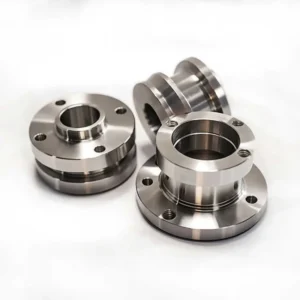
303 vs 304 vs 316 Stainless Steel: CNC Machining Guide
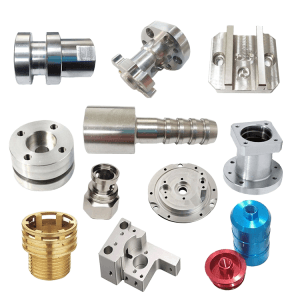
2024 vs 6061 vs 7075 Aluminum — Which Alloy to Pick for CNC Machining?
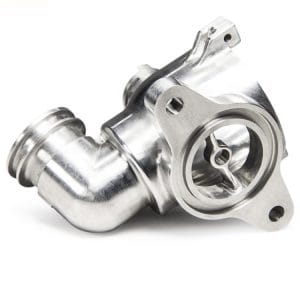
Why 5‑Axis Machining Centers Excel at Complex Geometry Parts?
Would you like to start a project with us?
FAQs About CNC Machining materials
What types of materials can you process?
We offer a wide range of material options, covering metals such as aluminum and steel, as well as engineering plastics and high-performance composites. Specific grades include aluminum alloys (e.g., 6061, 7075), stainless steel (e.g., 304, 316L), carbon steel, PEEK, Nylon, Polycarbonate, and more. We can recommend the most suitable material based on your application requirements.
How do I determine which material is best for my application?
Material selection depends on several key factors: application environment (temperature, humidity, corrosiveness), mechanical performance requirements (strength, hardness, toughness, wear resistance), manufacturing process (machining, injection molding, casting), and cost budget. We recommend providing details about your specific application scenario, and our engineers will conduct a comprehensive evaluation and recommendation for you. Request material? Contact our team: ashely@rpdmfg.com.
Can you assist with material selection and provide technical advice?
Absolutely. Our DFM engineering team will analyze your working conditions, mechanical requirements, corrosion‑resistance needs, weight constraints and project budget, then recommend the most suitable metal material for your application. Free DFM review is available once you share your CAD files.
How do you ensure that the materials you provide meet my required specifications and certifications?
All materials are sourced from certified, reputable suppliers. We can provide Material Test Certificates (MTC/MTR), Technical Data Sheets (TDS), and declarations of compliance with environmental standards such as RoHS and REACH.
What order sizes are available for metal CNC machining services?
We handle one‑off prototypes, small‑batch trials and large‑volume mass production for metal CNC components. Our flexible stock setup helps optimize cost for different order quantities.