There are wide range of stainless steel grades available. Which one best fits your project?
Blog Outline
Key Properties for Mainstream Stainless Steel Grades in CNC Machining
1) Austenitic Stainless Steel
- 303: Free machining grade with added sulfur to improve chip evacuation. It delivers the best machinability and is the top choice for turned parts. However, it is not suitable for welding, as welded joints are highly prone to brittle fracture and failure.
- 304 / 304L: 304 is the general purpose austenitic stainless steel with well rounded overall performance. Its drawback is stringy chips and difficult to remove burrs around hole edges. 304L is its low carbon variant that reduces the risk of intergranular corrosion after welding, yet its machinability is slightly inferior to standard 304.
- 316 / 316L: Molybdenum is added to 316, giving it superior resistance to salt spray and marine environment corrosion compared with 304. It is ideal for fluid handling and marine components. Its downside is higher material toughness that accelerates tool wear; machining cycle time increases by 15-30%. 316L is designated for welded structural parts.
- 321: Titanium stabilized grade for high temperature service with good resistance to intergranular corrosion; difficult to machine.
- 347: Niobium stabilized grade intended for high temperature equipment.
- 301: High ductility grade, usually suefor stamping and spring components.
The suffix L stands for low carbon grade. Prioritize 304L / 316L only if welding is required. For non welded applications, use standard 304 or 316 for higher machining efficiency and lower cost.
2) Martensitic Stainless Steel
Suitable for applications requiring hardness and wear resistance. Magnetic and hardenable via quenching. Corrosion resistance is far lower than that of austenitic grades.
- 416: Free machining martensitic grade, very common for CNC turning. Its machinability is close to 303 while offering higher hardness. The key difference is that it can be quenched via heat treatment to boost hardness. It fits load bearing and wear resistant shaft type parts but features poor rust resistance and tends to corrode in humid environments.
- 420: Used for cutters, shafts and valve components; quenchable to HRC 50+.
- 440C: Extremely high hardness for bearings, cutting tools and wear resistant parts; high machining difficulty.
3) Ferritic Stainless Steel
- 430: Moderate corrosion resistance, magnetic, cost effective. Mostly used for sheet metal work and rarely applied in precision CNC machining.
4) Precipitation Hardening (PH) Stainless Steel
17-4 PH (17-4 PH H900 / H1025) can be strengthened through precipitation hardening heat treatment. It delivers high strength and moderate corrosion resistance. Widely adopted for medical fixtures and aerospace components, it can reach hardness above HRC 40 after heat treatment.
CNC Machining Comparison of Five Major Stainless Steel
(303 vs 304 vs 316 vs 416 vs 17-4 PH)
Grade | Main Type | Machinability | Corrosion Resistance | Heat Treatable | Magnetic | Composite Cost |
303 | Austenitic | ★★★★★ | ★★ | No | Weak | $$ |
304 /304L | Austenitic | ★★★ | ★★★ | No | Weak | $$$ |
316 /316L | Austenitic | ★★☆ | ★★★★ | No | Weak | $$$$ |
416 | Martensitic | ★★★★☆ | ★★ | Yes | Yes | $ |
17-4 PH | Precipitation Hardening | ★★ | ★★★ | Yes | Yes | $$$$$$ |
Why Choose Our Stainless Steel CNC Machining Services?
Beyond ordinary cnc machining capabities, we also have Tolerance Control, Deformation Mitigation and Defect Solving Capabilities
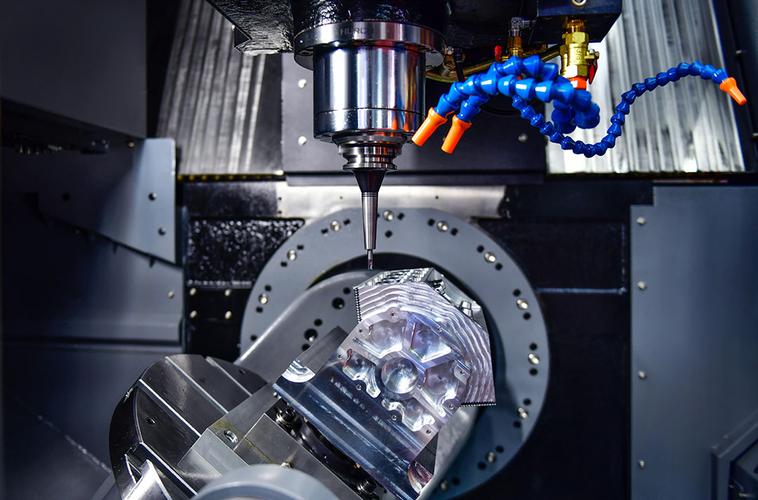
1. Achieving target tolerances for stainless steel parts depends not only on 5-axis machine precision but also on fixturing, cutting strategies, cooling and process sequencing to secure high yield rates. For rigid mating surfaces, we can stably hold tolerances down to ±0.002 mm.
2. Thin wall and deep cavity parts suffer mainly from two types of deformation: clamping induced deformation and thermal deformation. Soft jaws are preferred to distribute clamping force and avoid part crushing or indentation from hard jaws. Trochoidal milling is adopted for deep cavity roughing to reduce radial cutting force. A reasonable finishing allowance is reserved after roughing to release internal stress before finishing cuts. For stainless steel walls thinner than 0.8 mm, avoid full depth cuts in one pass. Multiple light cuts are applied to limit heat accumulation and prevent spring back deformation post machining.
3. Other Custom Stainless Steel Parts Common Defects & Countermeasures
- Persistent burrs: High toughness of austenitic stainless steel causes hard to remove burrs at corners and hole openings. Add chamfers at the design stage to lower deburring costs.
- Surface tearing: Usually caused by dull cutting tools combined with insufficient feed per tooth. Replace tools promptly and adjust cutting parameters.
- Local rust after passivation: Mostly triggered by cross contamination from carbon steel chips. We separate workstations for different material families and perform passivation strictly per ASTM A967 standard.
DFM Design Recommendations:
Reduce Costs & Scrap Rates for Custom Stainless Steel Parts
Many cost issues you can find from drawing design, like applying tight tolerances across an entire drawing. DFM optimization principle: Reserve tight tolerances only for functionally critical features such as bearing mating surfaces and locating pin holes. Relax tolerances for non-functional cosmetic surfaces and inner cavity walls to ±0.05-0.1 mm. This accelerates machining, lowers scrap rates and reduces unit price.
For stainless steel thread design: keep thread depth within 1.5 × thread diameter. Excessively deep threads risk tap breakage and part rejection. Avoid sharp internal corners; specify minimum internal radii ≥0.8 mm for tool accessibility. Minimize free hanging thin wall cantilevers. Add temporary support ribs where necessary and remove them post machining.
More Tips for Stainless Steel CNC Machining
1. Do not use 303 for welded assemblies; sulfur content causes weld cracking.
2. Avoid extensive material removal on 17-4 PH after heat treatment; hardnessmakes cutting extremely difficult.
3. Keep stainless steel machining stations physically separated from carbon steel workstations. Carbon steel debris adhering to stainless steel surfaces creates rust spots. Or do passivation for stainless steel machining parts, it can keep ultimate non-corrosion-resistant surface.
Submit Your STEP / CAD Drawings for Our Free DFM Review
We will do risk preemption including improper grade selection, hard to manufacture geometries and unreasonable tolerances, minimizing rework and sample revisions.
If you are working on custom stainless steel non standard parts and require grade selection confirmation, DFM process evaluation or quotation, send we your 3D drawings, order quantities and technical specifications now. You will get free technical support and formal quotations within 24 hours.
Summaries
- Lowest cost tier: 416 ≈ 303. Both are optimal for high volume, non welded parts requiring basic atmospheric corrosion resistance. 416 can be slightly cheaper than 303, butcorrosion resistance and toughness are not good as 303. Avoid 416 for salt spray or weak acid alkali environments.
- 303 vs304: Use 303 whenever welding is not required. Switch to 304 only when welding or enhanced corrosion resistance is needed.
- 304 vs 304L and 316 vs 316L carry nearly identical material costs. Select low carbon stainless steela welded parts or moderately corrosive media.
- 316 / 316L composite cost approximately 20% more than 304, The extra cost buys chloride pitting corrosion resistance. 304 is sufficient for fresh water, food contact and general outdoor applications, do not pay for corrosion performance you will never use.
- 17-4 PH is a high cost option: Its value lies in post aging strength (>1100 MPa) paired with 304 level corrosion resistance. If this strength level is unnecessary, choose quenched and tempered 416 or the 410 series to cut costs by more than half.
FAQ
Q1: How do I choose between 303, 304 and 316 stainless steel, and what are their core differences?
303 offers the best machinability for non welded applications. 304 is general purpose with good cost performance. 316 delivers superior salt spray corrosion resistance for marine and fluid handling environments. 303 cannot be welded. For welding parts on 304 and 316, select 304L or 316L.
Q2: What practical tightest tolerances can be stably achieved in stainless steel CNC machining?
Rigid critical assembly features can reach ±0.002 mm. Thin wall, deep cavity and slender parts suffer from stress driven deformation; typical stable tolerances is±0.01-0.03 mm. Specifying ultra tight tolerances across the full drawing is not recommended.
Q3: When should heat treatment be performed for 17-4 PH components?
Complete all rough machining in the solution annealed condition. Perform heat treatment precipitation hardening afterwards, leaving only minor finishing process as machining difficulty rises sharply once the 17-4 PH is hardened.
Q4: Why recommended stainless steel machining part to do passivation?
When performing CNC machining (carving, milling, drilling, sawing) on stainless steel, the original passivation film will be damaged.Those stainless steel parts use in outdoor, humid, saltwater, seaside environments, as well as in food, medical, fluid, valve and pipe fittings, appearance components, recommend passivation.
Q5: How to minimize deformation for thin wall stainless steel parts?
Use soft jaws to reduce clamping force. Apply trochoidal milling and multiple light depth cuts. Perform roughing to release internal stress before finishing, and limit heat build up.
Q6: What are typical lead times for stainless steel machined parts, and what factors extend lead time?
7-10 working days for small batch prototypes; 12-20 working days for small to medium volume orders. Heat treatment, electropolishing and raw material stock outs will lengthen lead times.
Q7: What risks arise of customize stainless parts if drawings state only “smooth surface” without defined Ra roughness values?
Different people may interpret “smooth” differently, leading to post delivery disputes. Always specify Ra numerical values and define post processing standards on drawings.
Q8: Both 416 and 303 are free machining stainless steels. How do I decide between them?
Pick 303 if no heat treatment is needed. Choose 416 when quenching for higher hardness and wear resistance is required. Note that 416 has poorer rust resistance compared to 303.