With my 18 years experience in precision CNC machining, high-volume production, custom parts and prototyping, I have observed a common misconception: many guys believe that high quality equal to use premium, high-cost materials and manufacturing ultra-precision components. In fact, some parts does not need such tight tolerance requirements.
A truly mature machining process is one that rigorously guarantees part tolerances, surface finish, service life, and assembly performance. Today, drawing on my shop-floor experience, I will break down a comprehensive, quality-neutral CNC cost-reduction framework across five dimensions: material selection, process planning, programming, tooling management, and production control.
Blog Outline
1. Precision Material Selection: Curbing Cost Waste at the Source
Material cost is a core component of CNC part expenses and also the area most prone to over specification and inflated costs. To mitigate risk, many product designers and procurement teams habitually opt for “premium” grades, choosing high-end alloys for general structural parts or difficult-to-machine materials for otherwise free-cutting applications. This action just drives up both material unit cost and machining cost, no help for improving quality.
The golden rule is: select materials strictly according to functional requirements, no over-specification, no compromise on machinability, and priority choose free-cutting grades materials.
- For general lightweight structural parts, equipment housings, and jig/fixture components, 6061 aluminum alloy is the preferred choice over 7075 aerospace aluminum. 6061 fully meets conventional load-bearing and accuracy requirements, offers higher machining efficiency and lower tool wear, and reduces material and machining costs by over 30% compared to 7075.
- For stainless steel parts requiring corrosion resistance, 303 free-machining stainless steel should be the go-to for batch production avoid the blind use of 304 or 316. 303 hasdoublemachinability than 304, significantly reducing cycle times and tool wear.
- For general shafts and structural steel components, use 12L14 free-cutting steelto replace 45# steel or Q235. Its superior cutting performance and process stability minimize deformation and edge chipping, maintaining part quality while effectively shortening machining time.
- For prototypes, insulating parts, and decorative components, prioritize engineering plastics such as ABS, POM, and acrylic over metals.
In additional, sourcing raw materials in standardized stock can reduces subsequent heavy pocketing and trimming operations, cutting material waste and machining time a frequently overlooked yet highly effective cost-saving measure at the source.
2. Process Optimization: Trimming Redundancies While Preserving Critical Precision
The most insidious waste in CNC machining is redundant processing steps. The core of process optimization lies in clearly distinguishing between critical precision surfaces and non-critical general surfaces, then applying differentiated processing strategies accordingly.
- For critical surfaces, say toleranced to ±0.01 mm, involved in assembly fits, sealing, or locating functions, retain the full sequence: roughing, semi-finishing, finishing, corner cleanup, and inspection. Strictly control cutting parameters and cooling methods to ensure precision and surface finish.
- For non-critical aesthetic surfaces, recessed backs, and excess stock that have no assembly or accuracy requirements, simplify the process directly: eliminate multiple passes, reduce finishing steps, reasonably increase depth of cut and feed rate, and avoid over-polishing or excessive edge finishing. This differential approach can shorten machining time by 20%–40%, but keep the same quality.
Equally important is the rational consolidation of operations. For simple shaft-type or disc-type parts, prioritize turn-mill compound machining with single-setup forming to avoid time waste and positioning errors from repeated clamping and realignment. This not only boosts efficiency but also ensures part consistency and eliminates quality risks associated with secondary fixturing.
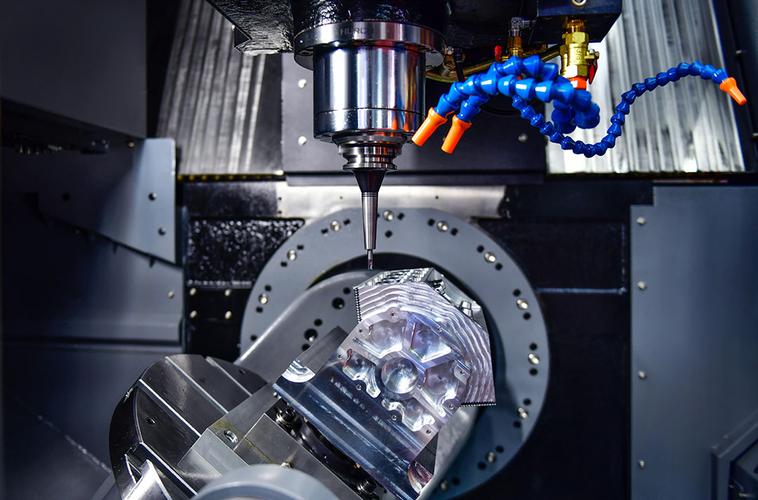
Furthermore, if a part can be machined on a 3-axis machine, don’t process by a 5-axis machine, cuz the operating cost of a 5-axis is substantially higher, with no added benefit for the part’s functional requirements.
3. Programming Parameter Optimization: Moving Beyond Conservative Settings for Efficient, Stable Production
A common pitfall among novice programmers is excessive conservatism—deliberately reducing spindle speeds, lowering feed rates, and taking shallow, multiple passes to avoid tool breakage or workpiece deformation. That cause in abysmal machining efficiency, doubled cycle times, and unnecessarily high costs. In fact, legitimate free-cutting materials have well-established safe parameter areas.
Drawing on shop-floor production experience, here are my practical programming optimization tips:
- For free-cutting materials like brass and 6061 aluminum, adopt a high-speed, high-feed, high-depth-of-cut strategy to fully leverage their machinability and minimize air-cutting time.
- For harder materials such as stainless steel and alloy steels, use layered cutting, steady feed rates, and adequate cooling to avoid chatter & built up edge that lead to rework or scrap.
Moreover, tool path refinement is very important. Eliminate redundant tool paths, non-cutting air moves, and unnecessary cleanup passes. In many cases, inefficient machining is not a matter of equipment or material limitations, but rather a lack of fine-tuned programming logic.
4. Tooling Management: Minimizing Consumable Waste and Reducing Long-Term Wear Costs
Tooling consumables represent the second-largest variable cost in CNC machining. Many shops waste far more on tools than on labor or machine time.
The key to quality-neutral tooling cost reduction is threefold: dedicated tools for dedicated materials, graded usage, and maximized tool life.
- First, strictly match tool material to workpiece material, eliminate cross-material tool mixing to avoid rapid wear and surface defects.
- Second, implement a graded tool usage system: brand-new tools reserved for high-precision finishing and critical surface machining; lightly worn tools with intact cutting edges relegated to roughing, slotting, pocketing, and non-critical surface work. This maximizes remaining tool life and can reduce consumable costs by over 30% without frequent new-tool purchases.
- Third, standardize cooling and cutting parameters to prevent heat-induced tool failure and catastrophic breakage from aggressive cutting. Extended tool life not only lowers consumable costs but also reduces downtime for tool changes, improves machine utilization, and indirectly reduces per-part processing cost.
5. Process Control: Reducing Rework and Scrap to Avoid the Highest Cost Penalty
You know stable process control is the most cost-effective form of cost reduction.
Shop-floor control practices that deliver results:
- First-article inspection: after the first piece is machined, rigorously inspect tolerances, surface finish, and appearance. Only after approval should batch production commence, preventing systemic defects from the start.
- In-process inspection: conduct periodic sampling during batch runs to detect parameter drift, tool wear, machine vibration, and other issues early, allowing timely adjustments that prevent large-scale scrap.
- Final inspection: perform full inspection upon completion to ensure outgoing quality.
Additionally, standardize fixturing methods and use appropriate jigs and work holding devices to minimize setup errors and part deformation, reducing rework probability. A stable first-pass yield rate is the bedrock of cost-effective mass production.
6. Conclusion: True Cost Reduction Means Enhancing Quality and Efficiency, Not Cutting Corners
Over my years in the industry, I have always maintained that cost reduction in CNC machining is never about lowering standards, skimping on processes, or using inferior materials. Rather, it is about eliminating all ineffective, redundant, and wasteful costs. Quality and cost are not opposing forces meticulous material selection, process planning, programming, tooling, and production management can simultaneously guarantee part accuracy, appearance, and service life while drastically compressing non-value-added costs and boosting productivity.
Contact us and send us your drawings,we will help you optimize your production workflow, reduce cost waste, and achieve a virtuous cycle of high quality, low cost, and high efficiency in mass production.
FAQS
1. What is the most effective way to cut CNC machining costs without lowering quality?
The most efficient method is DFM (Design for Manufacturability) optimization. Simplify complex geometries, avoid deep narrow cavities and ultra-thin walls, and adopt standard tool sizes. This reduces machining time, tool wear and setup complexity while fully preserving part functionality and precision.
2. Why tight tolerances raise costs?
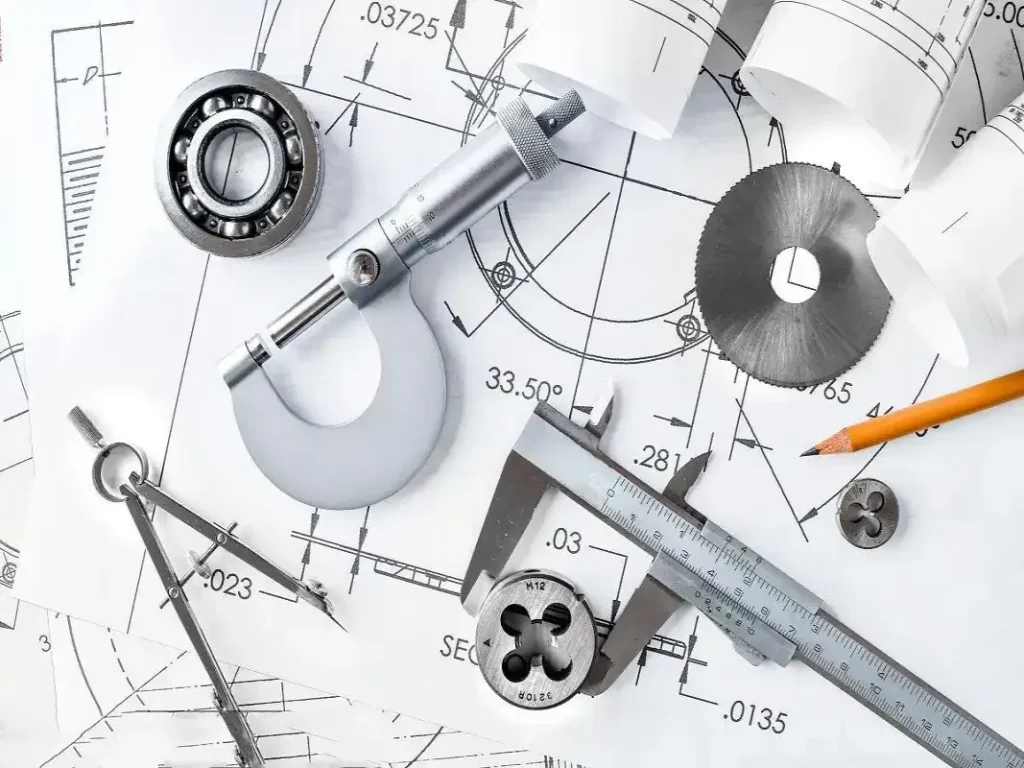
Tight tolerances demand slower cutting speeds, multiple finishing passes, frequent tool calibration and precise inspection, which multiply labor & machine time. You can loosen tolerances, say ISO 2768-mk on non-assembly, non-functional surfaces without affecting final product performance. Mark critical tolerance zones clearly on drawings to guide RPD machinists.
3. How to choose cost-effective raw materials without sacrificing mechanical performance?
1. Replace high-grade expensive alloys with standard grades if strength/hardness requirements allow (e.g., 6061 Al instead of 7075 for non-load-bearing aluminum parts);
2. Use standard stock bar sizes matching your part outer dimension to minimize material removal waste;
3. Avoid rare, specialty metals with long lead times and high material premiums;
4. For low-wear parts, pick pre-hardened stock to skip secondary heat treatment.
4. Batch production vs one-off prototype: How to reduce costs for both scenarios?
Prototypes: Use cheaper substitute materials, simplify non-key features, reuse existing fixtures to skip custom fixture fees. Mass batches: Optimize CAM tool paths, adopt multi-station fixtures, negotiate volume discounts with manufacturers, standardize tooling for all parts in the batch.
5. How much cost reduction can I achieve through design optimization alone?
Proper design optimization (rational tolerances, standardized features, simplified geometry) typically reduces CNC costs by 20%–40% without any negative impact on mechanical performance, precision or surface quality.
6. What information should I provide suppliers to avoid extra hidden CNC costs?
Complete 2D/3D drawings with clear tolerance marks, material specs, surface finish standards, quantity, and non-mandatory feature notes. charges. Then prioritize detailed communication with suppliers.
7. How to control CNC costs without increasing defect rates?
Adopt upstream quality control rather than only final inspection. Complete DFM reviews before production, optimize toolpaths and fixture solutions, and conduct in-process dimension checks. This prevents rework and scrap caused by design or processing errors, saving hidden costs stably.
8. Does batch ordering help reduce CNC machining costs?
Yes. Single prototype orders bear high one-time setup and programming costs. Proper low-to-medium batch production spreads fixed NRE (non-recurring engineering) costs, lowers unit price, and maintains consistent quality through stable batch processing. For example, if you really just need small quantity, then order 5 pcs is much cheaper than 1pcs, why don’t you order 5 pcs?
Share this article