Alloy steels, enhanced by some alloying elements including Cr, Mo and Ni, feature superior hardenability, fatigue strength and impact toughness compared with carbon steels.
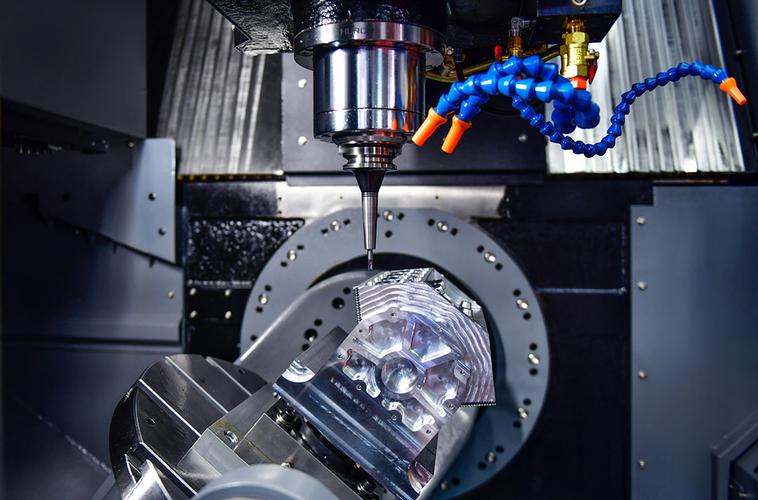
Uniform mechanical properties can be achieved even for large size components. They are widely used for 5-axis machining and custom turn mill composite precision parts such as shafts, shaft pins, gears and heavy duty fixtures in automation, automotive, new energy equipment, etc. Material selection shall be comprehensively determined based on load conditions, cross section dimensions and budget.
Blog Outline
Alloy Steel Comparison & CNC Machining Selection: 4130 vs 4140 vs 4340 vs 8620 vs 52100
SAE 4130 (EN-34CrMo4 / 1.7220)
SAE 4130 is a lowcarbon Cr-Mo alloy steel with lower carbon content than 4140. Commonly achieved quenched & tempered hardness ranges from HRC 22-30.It delivers relatively good weldability and is suitable for medium load pipe fittings, bolts and small size shaft parts requiring partial welding. It exhibits favorable machinability, yet its hardenability is moderate; it applies to parts with cross section ≤40 mm. Core strength will drop significantly with excessive wall thickness.
SAE 4140 (EN-42CrMo4 / 1.7225)
SAE 4140 is the most widely used general purposes quenched & tempered Cr-Mo alloy steel for CNC machining. Its typical quenched & tempered hardness is HRC 28-36. It is extensively adopted for drive shafts, shaft pins, fixtures and high strength bolts. Annealed blanks show acceptable cutting performance. After quenching & tempering heat treatment, cutting resistance rises remarkably and tool wear accelerates during finishing. Production workflow tips: perform rough machining first, leave finishing stock allowance, conduct quenching & tempering, then carry out finish turning / finish milling to mitigate deformation risks. Its limitation is moderate hardenability. Full through hardening can’t be realized for cross sections over 50 mm. Balancing material cost, machining cost and mechanical performance, SAE 4140 is the cost effective option for most general heavy duty non standard components.
SAE 4340 (EN-34CrNiMo6 / 1.6582)
SAE 4340 is a Cr-Ni-Mo alloy steel with added nickel compared to 4140. Its core advantages are exceptional hardenability and excellent low temperature impact toughness. Quenched & tempered hardness ranges HRC 30-38. Even large cross section parts can be through hardened. It is preferred for components under alternating impact loads or where component failure would result in critical safety hazards,like heavy duty crankshafts, high load connecting rods & stressed construction machinery components. Downsides include higher material cost, increased machining difficulty after quenching & tempering, and poor weldability. Welding processes should be avoided at the design stage.
Carburizing Alloy Steel: SAE 8620 (EN-20NiCrMo2 / 1.6523)
SAE 8620 is a globally popular Ni-Cr-Mo carburizing alloy steel. After carburizing and quenching, surface hardness reaches HRC 58-62 for outstanding wear resistance, while core hardness remains HRC 25-35 to retain high toughness, combining impact resistance and wear resistance. Typical applications: gears, sprockets and pin sleeves. Practical process tips: Annealed raw stock offers excellent machinability, suitable for high volume rough machining on 5-axis machines and Swiss type lathes. After carburizing quenching, part hardness becomes extremely high; only grinding operations are feasible, ordinary CNC cutting is no longer viable. DFM tips: sharp corners shall be modified with fillet transitions to prevent micro cracks caused by stress concentration at sharp corners post carburizing.
Bearing Alloy Steel: SAE 52100 (EN-100Cr6 / 1.3505)
SAE 52100 is a high chromium bearing steel. Hardness after quenching can reach HRC 60-64 with excellent wear resistance. It is commonly used for wear resistant rollers, shaft sleeves and bearing inner rings. Its weakness is low impact toughness; it is not suitable for heavy impact loads parts. Spheroidized annealed blanks have moderate machinability. Once quenched, conventional milling is almost impossible and only grinding is applicable. Reminder: Some customers select SAE 52100 for structural components. Under impact loading, fracture and failure may easily occur.
Practical Pain Points in Alloy Steel CNC Machining & DFM Design Guidelines
Mitigating Deformation Risks Induced by Heat Treatment
The biggest processing risk for alloy steel parts is heat treatment induced deformation. Direct quenching & tempering after rough machining releases internal residual stress and leads to dimensional shift & warpage. Correct process flow: Raw blank → Rough machining (leave unilateral finishing allowance of 0.3-0.8 mm) → quenching & tempering / carburizing heat treatment → Stress relief → Finish machining. For slender shaft type thin wall alloy steel components, an extra stress relief annealing step may be required to minimize subsequent dimensional drift. If drawings lack reserved heat treatment allowance, DFM feedback shall be submitted during quotation to advise allowance modification.
Cutting Challenges, Tool Selection & Prevention of Surface Treatment Defects
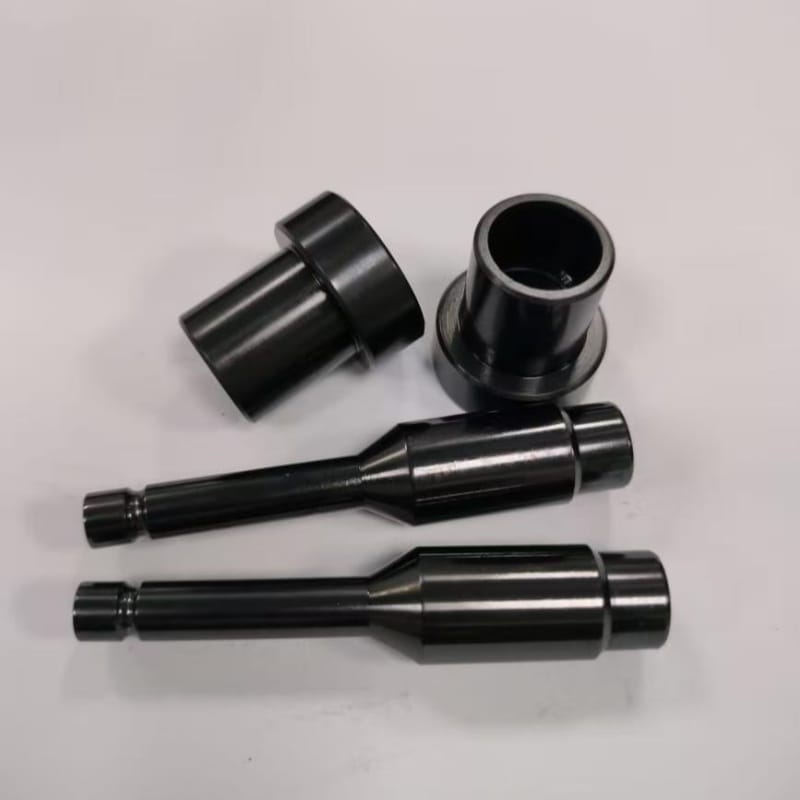
Quenched & tempered 4140 and 4340 deliver high cutting resistance. Cemented carbide cutting tools are preferred; reduce feed rate to prevent tool chipping. Alloy steel parts rust rapidly without anti-rust surface treatment. Available options: black oxide, phosphating, hard chrome plating, DLC( the pump parts in blog was made by alloy steel 4130 for European client, it’s automotive customized CNC parts, we do nitriding & DLC, just FYR) . Important reminder for chrome plating: No tool marks or porosity shall exist on substrate surfaces, otherwise pitting and peeling of plating will occur. Plating thickness must be included in the dimension chain for mating tolerance features. Neglecting plating thickness frequently causes assembly jamming.
Common Procurement Mistake: Equivalent Steel Grades Cannot Be Swapped Directly
Many purchasers use 42CrMo for parts marked SAE 4140 without verifying material properties. Although chemical compositions are similar, differences exist in melting cleanliness and trace element content among different steel mills. For critical load bearing components, grade substitution shall not be implemented arbitrarily. If substitution is required, performance evaluation must be completed and material traceability reports shall be retained.
Alloy Steel Quick Selection
SAE Grade (EN / BS Equivalent) | Heat Treatment | Primary Application Scenarios | Selection Notes |
4130 (34CrMo4 / 1.7220 / 708A37) | Quenched & Tempered HRC 22-30 | Medium load shafts, pipe fittings, structures requiring partial welding | For applications where limited weldability is needed and load level is moderate |
4140 (42CrMo4 / 1.7225 / EN19) | Quenched & Tempered HRC 28-36 | Shaft pins, drive shafts, fixtures, high strength bolts | General heavy duty service, cost priority; cross section ≤50 mm |
4340 (34CrNiMo6 / 1.6582 / EN24) | Quenched & Tempered HRC 30-38 | Heavy section high load components under alternating impact | Large cross section, high safety requirement; higher cost |
8620 (20NiCrMo2 / 1.6523 / 805M20) | Carburized & Quenched | Gears, pin sleeves; wear resistance plus impact resistance | Hard surface + tough core; not for through quenching & tempering |
52100 (100Cr6 / 1.3505 / 534A99) | Quenched HRC 60-64 | Wear resistant rollers & shaft sleeves | High wear resistance; not for heavy impact loads |
Sourcing & Quote Tips for Custom Alloy Steel CNC Parts
When requesting quotations for alloy steel components, you’d better specify clearly:
- Complete material grade (SAE designation + whether equivalent substitution is permitted)
- Heat treatment method and hardness range
- Whether Material Test Certificate (MTC) is required
- Type of surface treatment
- Critical tolerances and plating thickness requirements
Remind: Alloy steel parts involve heat treatment operations, cause longer lead time compared with ordinary carbon steel parts. Reliable suppliers, like RPD, we will provide DFM process reviews at quotation phase to identify drawing process risks, rather than discovering problems after order confirmation.
For other material guide, you can reference our CNC materials selection page , or click our other blog of CNC stainless steel guide, CNC machined carbon steel material selection, Aluminum CNC materials Selection.
Summaries
Distinguish carbon steel from alloy steel well; specify grade and heat treatment hardness; clarify permission for equivalent grade substitution; define anti-rust surface treatment requirements; request MTC material certificates for critical components. If material selection is uncertain, provide service condition descriptions, part cross section and load parameters to engineering team for materials recommendations, to avoid batch scrap caused by improper materials selection.
For prototype or volume custom manufacturing of non standard alloy steel CNC parts, contact our team now and submit STEP / IGS drawings for complimentary DFM process review, materials proposal, tolerance assessment and formal quotation.
FAQ
Q1: Can SAE 4140 and 1045 replace each other?
Direct interchange is not recommended. 1045 is carbon steel without Cr-Mo alloying elements and exhibits poor hardenability; core strength is insufficient for thick sections. Substitution may only be evaluated for small cross section low load conditions. SAE 4140 alloy steel is preferred for heavy duty applications.
Q2: Can equivalent material grades be used as an unconditional replacement for the specified one, say using 42CrMo in place of SAE 4140?
Unconditional direct substitution is prohibited. Equivalent grades have similar chemical composition but differ in melting cleanliness and trace element content. For critical load bearing parts, prior confirmation is mandatory and MTC documentation shall be obtained.
Q3: Is heat treatment mandatory for alloy steel components?
It’s depends. Heat treatment can be omitted for non load bearing structural parts. For shafts and pins under load and torque transmission, quenching & tempering or carburizing heat treatment is required to achieve design specified mechanical properties.
Q4: How much more expensive is 4340 vs 4140? When is 4340 mandatory?
Combined raw materials and machining cost for 4340 is approximately 30-60 % higher than 4140. Select SAE 4340 for parts with large cross section, subjected to alternating impact, or where component failure creates safety hazards.
Q5: Can CNC milling be performed after SAE 8620 carburizing?
Post carburizing quenching surface hardness reaches HRC 58-62. Conventional CNC cutting is impractical and only grinding is viable. Finishing stock allowance must be completed before the carburizing process.
Q6: How to solve rusting of finished alloy steel parts? What surface treatments are available?
Alloy steels have no inherent anti-rust capability. Available treatments: black oxide, phosphating, hard chrome plating and etc. Plating thickness must be considered for assembly tolerances. Temporary rust preventive oil is acceptable for internal short term use parts.
Q7: What is your minimum order quantity for alloy steel prototypes? Can one off samples be produced?
One off prototype to OEM mass volume production is supported. If request heat treatment, unit cost for single prototypes is higher than mass production.We suggest 3-5pcs for prototyping.
Q8: Typical lead time for alloy steel CNC machined parts?
7-12 working days for prototypes including heat treatment; 12-25 working days for mass production orders, excluding Transportation turnover.
Q9: Can Material Test Certificates (MTC) and inspection reports be provided?
Yes. Materials test certificates and in house dimensional inspection reports can be provided.
Q10: Can ultra tight tolerances be achieved for alloy steel parts?
Standard tolerance is ±0.01 mm – ±0.005 mm with rational part geometry. Pls contact our team firstly, if you require ultra tight tolerances. Our DFM engineer team will review tell you the best tolerance we achived before quote.
Share this article