Let me look back about 18 years ago, I hadn’t stepped my foot in the custom machining world yet, and I knew absolutely nothing about this. It took me roughly 3 months just to wrap my head around the basics of CNC machining.
Plenty of people have written about this topic. I’m going to keep things simple and throw in what I’ve learned from actually being in the this industry. If you’re someone who’s curious about custom CNC machining or if you’re just getting started as an engineer, purchaser, or project coordinator this one’s for you. In about 5 minutes, you’ll have a solid grasp of the history, the basic process, and the fundamentals of CNC custom machining. And trust me, getting these basics down will make your work so much easier down the line.
Think about all the metal objects you come across every day the bracket inside your laptop, a car engine block, even a custom metal tool. Ever stop to wonder how they get made so precisely?
The answer is CNC machining.
Blog Outline
So What Is CNC Machining?
CNC stands for Computer Numerical Control. You use a computer to give a machine precise instructions, and the machine automatically cuts and shapes material into exactly what you want.
Here’s a way to think about it. Say you’ve got a block of wood and you want to carve it into a specific shape. If you’re good, the result might be pretty decent. But here’s no two pieces will ever be exactly the same.
Now imagine there’s a machine with a cutting tool. You load up a piece of metal, feed it a digital blueprint, and this machine follows that blueprint perfectly cut after cut, pass after pass, zero deviation until the part is done. That’s CNC machining.
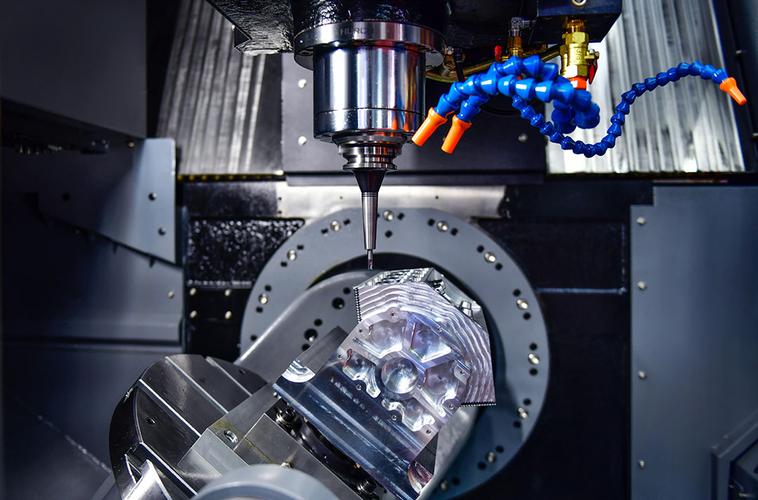
The machine reads a digital file, moves its cutting tool along precise paths, and carves the raw material into a finished part. Simple as that.
Where Did Modern CNC Come From? And How Was It Invented?
The story goes way back, and it all started in the United States.
The 1940s: The Birth of Numerical Control
Our story begins during World War II. The U.S. military had a problem: they needed to mass-produce complex aircraft parts, and every single one had to be identical. Hand machining was too slow, and the inconsistency was a real issue every part came out slightly different. When you’re building planes, “slightly different” can be catastrophic.
That’s where John T. Parsons comes in. He was an engineer from Traverse City, Michigan, and he and his company, Parsons Corporation, were working on helicopter rotor blades you know, those curvy, complicated things that are kind of essential for helicopters to actually fly. To nail down the precise coordinates of those complex curves, they started using punched cards those old cardboard cards with holes punched in them that early computers used to automatically calculate cutting coordinates.
In 1948, Parsons teamed up with MIT and landed a U.S. Air Force contract. The mission? Build a machine that could read those punched cards and automatically control a milling machine.
1952: The First NC Machine Arrives
Three years later, in 1952, MIT unveiled the first working Numerical Control (NC) machine. It was a modified Cincinnati Hydrotel milling machine hooked up to a massive control cabinet we’re talking vacuum tubes, relays, the whole nine yards. The thing filled an entire room.
Was it pretty or cheap? Definitely not. But did it work? You bet it did. That machine could read instructions from punched tape and move the cutting tool along precise paths no handwheels, no manual cranking, nothing.
The 1960s–70s: NC Evolves Into CNC
Here’s the thing about those early NC machines there was no actual computer involved. They ran on punched tape and hardwired logic. Think of it like a music box the pins on the cylinder determine the song, and you can’t change it without building a whole new cylinder.
But then minicomputers started popping up in the 60s and 70s, and everything changed. General-purpose computers replaced those dedicated hardwired controllers, and NC became CNC Computer Numerical Control. Suddenly you could program the machine with software, tweak programs on the fly, and store multiple machining jobs in memory. Total game changer.
And it wasn’t just an American thing anymore. Companies like Fanuc in Japan and Siemens in Germany became major players in the CNC controller market, bringing the technology to factories all over the world.
The 1980s–90s: The CAD/CAM Revolution
Before the 80s, programming a CNC machine meant writing line after line of G-code by hand. It was tedious, it was mind-numbing, and you basically needed specialized training just to do it.
Then CAD (Computer-Aided Design) and CAM (Computer-Aided Manufacturing) software hit the mainstream. Engineers could design parts right on a screen, and the CAM software would generate all the G-code automatically. It was like going from typing out code in assembly language to using a drag-and-drop design tool. The barrier to entry plummeted, and the whole process got way faster.
The 2000s to Today: Core of precision manufacturing
Fast forward to now, and CNC has come a long way. On the industrial side, you’ve got 5-axis simultaneous machining, robotic loading and unloading systems, AI-powered optimization you name it. The tech is seriously impressive.
How Does It Actually Work?
Step 1: It All Starts With a Digital Design
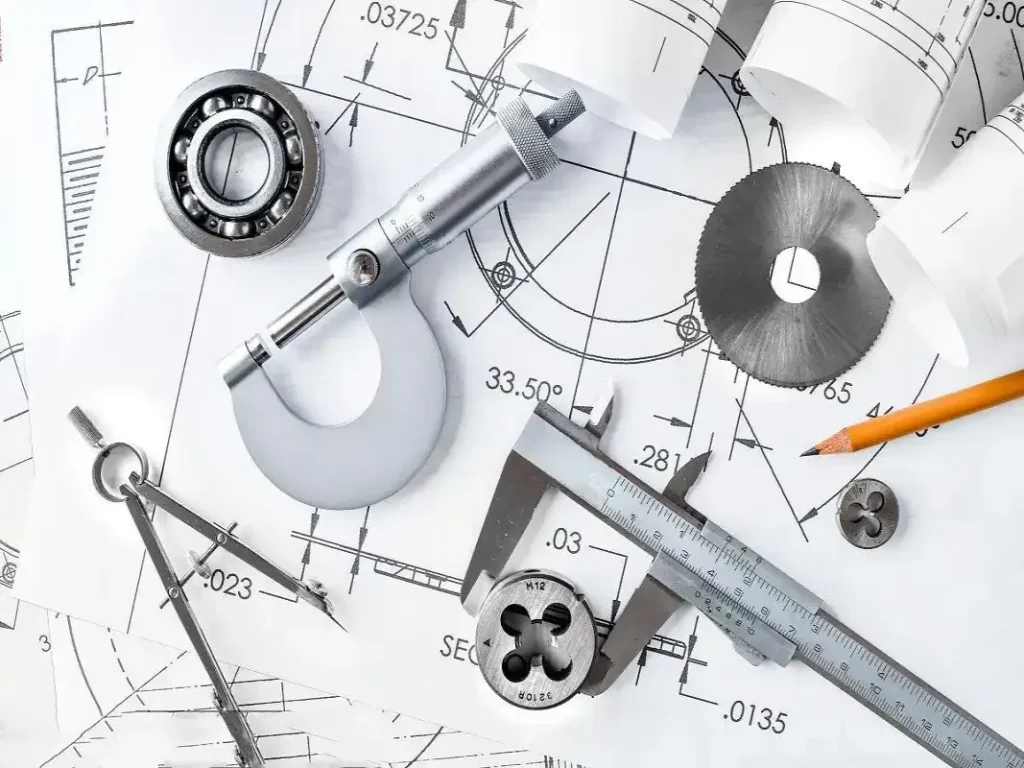
Before any cutting happens, you need a 3D model. An engineer or designer fires up software like SolidWorks, Fusion 360, or AutoCAD and builds a digital version of the part on the computer.
And I mean detailed. Exact dimensions, angles, curves, tolerances everything. If the part needs a hole that’s exactly 8.5 millimeters wide and 12 millimeters deep, we’re talking precision down to the micron level. Serious stuff.
Step 2: Translating the Design Into Machine Language
The 3D model looks great to us, but the machine doesn’t know what to do with it. It speaks a different language something called G-code.
This is where CAM software comes in. It takes the 3D model and generates all the G-code, which is basically a list of commands telling the machine exactly what to do:
“Move the cutting tool 50 millimeters to the right”
“Lower the tool 2 millimeters into the material”
“Cut a circle with a 15-millimeter radius”
“Crank the spindle speed up to 3,000 RPM”
Think of it like a recipe, but instead of ingredients and steps, it’s coordinates and speeds.
Step 3: Setting Up the Machine
This is where the our operator really earns their keep. Before any cutting starts, they’ve got to get everything ready:
Load the raw material called a “blank” or “workpiece.” It could be aluminum, steel, plastic, brass, wood… pretty much anything you can cut.
Install the right cutting tools different jobs need different tools, just like a drill has different bits.
Align and set the zero point the machine needs to know exactly where the material is so it cuts in the right place. Mess this up and you’re scrapping parts.
A good setup operator is worth their weight in gold. Seriously.
Step 4: Let the Machine Do Its Thing
Once everything’s set up and the G-code is loaded, the operator hits start and the machine takes over.
The cutting tool spins at thousands of RPM and follows the programmed path, shaving off material bit by bit. Chips fly, coolant sprays, and slowly but surely, the part starts to take shape.
How long does it take? Depends on the part. A simple bracket might be done in ten minutes. A complex aerospace component could take hours. The operator keeps an eye on things, but the actual cutting is all automatic.
Step 5: Finishing Touches
When the machine stops, you’re not quite done yet. Most parts need some post-processing:
Deburring knocking off sharp edges and metal burrs
Sanding or polishing the surface
Surface treatments like anodizing or powder coating
Quality inspection breaking out the calipers, micrometers, or even laser scanners to make sure everything checks out
Only then do you have a finished part.
Why Is CNC Machining Such a Big Deal?
The Precision Is Mind-Blowing
We’re talking tolerances of 0.001 millimeters or less. That’s thinner than a hair. For comparison, even the most skilled machinist working by hand would be doing well to hit 0.05mm on a good day. When you’re building airplanes or medical implants, that level of precision isn’t just nice to have it’s a matter of safety.
Every Single Part Is Identical
Make one or make ten thousand they’ll all come out exactly the same. That’s huge for mass production. If your car needs a new brake caliper, you don’t want one that’s “close enough.” You want one that’s exactly like the original. CNC delivers that consistency, every single time.
Once It’s Set Up, It’s Fast
The setup takes time and skill, no question. But once you’re up and running? CNC machines are fast, and they can run 24/7 with barely any supervision. One operator can manage multiple machines at once. The efficiency gains are massive.
It Can Make Things Humans Can’t
Some shapes are just impossible to make by hand complex curved surfaces, deep internal cavities, tiny intricate features. CNC machines can follow tool paths that no human could ever replicate. It opens up a whole world of design possibilities.
Less Waste, Lower Cost
Because the cutting path is optimized by software, CNC machining only removes the material that needs to come off. Less scrap means lower material costs. And when you’re working with expensive metals like titanium or stainless steel? That adds up fast.
Where Do You Actually See CNC Machining in Real Life?
Everywhere. Here are just a few examples:
Aerospace Turbine blades, structural components, landing gear parts. All need to be insanely strong and insanely precise.
Medical Surgical instruments, implants, prosthetics. CNC can machine biocompatible metals to exacting standards.
Automotive Engine blocks, brake components, custom performance parts. The auto industry runs on CNC.
Electronics Those tiny metal brackets, heat sinks, and connectors in your phone or laptop? Yep, all CNC.
Consumer products That sleek metal watch case, your bike frame, the aluminum body of a camera. Chances are they’re all CNC-machined.
Prototyping Before committing to mass production, companies usually CNC-machine a few prototypes first to test fit, form, and function.
Conclusion:
CNC machining is really just two things working together: digital precision and physical cutting. A computer reads the design, translates it into instructions, and guides the cutting tool to shape raw material into a finished part. That’s it.
Got Parts You Need Machined?
If you’re reading this and thinking, “Hey, I’ve got parts that need to be made,” we’ve got you covered. At RPD Industrial Co., we run a full lineup of advanced CNC machining centers and all kinds of supporting equipment. Whatever you need made, chances are we can handle it. Wedo not just provide you custom parts, but also provide you all stop solutions.
Shoot us a message and you’ll have a quote within 12 to 24 hours.
Ready to get started? Contact us today.
FAQs
1. What Is CNC Machining?
CNC machining refers to Computer Numerical Control machining, a typical subtractive manufacturing method. Guided by digital programs, CNC machines use cutting tools to cut away unwanted material from raw blocks of metal, plastic or wood, creating finished workpieces with high precision.
2. Who Invented CNC?
John T. Parsons, known as the father of modern CNC, pioneered numerical control technology with Frank Stulen in the 1940s and secured the foundational patent for NC machine tools. He received the U.S. National Medal of Technology, was inducted into the National Inventors Hall of Fame, and earned the first Joseph Marie Jacquard Award for his revolutionary manufacturing breakthrough.
3. What Are the Modern Applications of CNC?
Today CNC technology serves as the core of precision manufacturing worldwide. Programmed by CAD and CAM software, CNC mills, lathes and five-axis machines produce high-accuracy parts for aerospace, auto, medical electronics and mold-making. Besides batch production, CNC is widely used for rapid prototyping. Now most CNC machines link with robots, sensors and cloud systems to realize automated, intelligent workshops with stable quality and less labor.
4. What Is the Simple Classification of CNC Machines?
- CNC Milling Machines: Vertical machining centers, horizontal machining centers, gantry machines and engraving mills for planes, cavities and molds.
- CNC Turning Machines: CNC lathes, turn-mill centers and Swiss-type lathes for shaft and disc workpieces.
- CNC Grinding Machines: Surface grinders, cylindrical grinders and tool grinders for high-precision finishing.
- CNC Special Processing Machines: Wire EDM, sinker EDM, laser cutters and water jet cutters.
- Other CNC Equipment: 5-axis machining centers, drill-tap centers, CNC gear machines and CNC sheet metal machines.