Mention 5-axis machining, many guys immediately associate it with high costs. However, for custom non standard complex parts, 5-axis machining can deliver a lower total cost than 3-axis or 4-axis processes. A large number of engineers prefer 5-axis machining for components with free form surfaces, deep cavities, angled holes and undercut features. What makes it so advantageous?
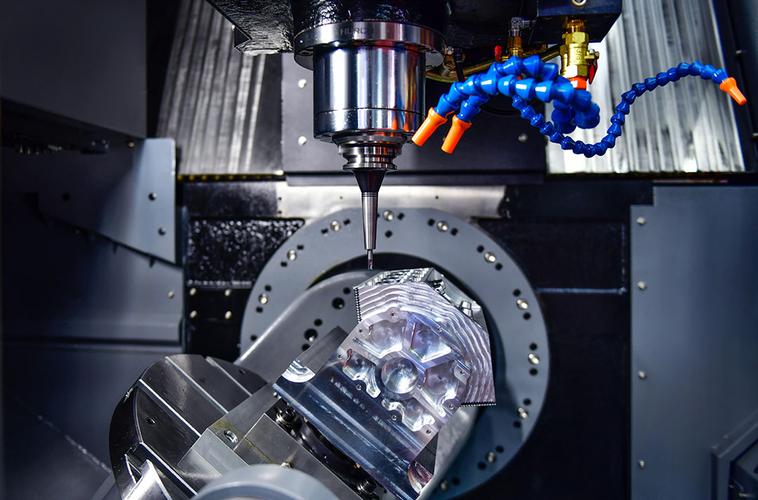
By combining X Y Z linear axes with two rotary axes, a 5-axis machining center effectively solves common manufacturing challenges such as positioning deviation, blind cutting zones and excessive cutting induced deformation. Therefore, it has become a mainstream manufacturing solution for high precision components in aerospace, medical devices, new energy equipment, automation and automotive industries.
The strength of 5-axis machining lies not only in faster cutting speed, but in higher dimensional accuracy and more stable yield for complex geometries. It greatly reduces secondary operations and mitigates typical defects including positional offset, witness lines and angular deviation.
Blog Outline
1. Can 3-axis machines make complex parts? What’s key limitations?
3-axis machining only enables linear cutting without table rotation. To produce parts with curved surfaces, angled holes, irregular cavities and multi angle features, manufacturers have to split production into multiple operations with repeated workpiece re-fixturing. Repeated set ups introduce cumulative positioning errors, making it difficult to hit tight tolerances of ±0.002 mm required by high end applications. Frequent re-clamping also leaves obvious witness lines, adds extra costs for polishing and trimming, extends lead times and often results in non-conformance on coaxiality and flatness, leading to rejected parts. For thin walled components in particular, repeated 3-axis cutting easily triggers stress related deformation.
2. Core advantages of 5 Axis Machining for Complex Parts
2.1 Complete Machining in One Setup to Eliminate Re-Positioning Errors
Either the workpiece or spindle can rotate at multiple angles on a 5-axis machine. Complex parts can finish all features including curved surfaces, angled holes, cavities and side profiles within a single fixturing cycle. Positioning stability is significantly improved, making it ideal for high volume production of high precision complex components.
2.2 5 Axis Simultaneous Machining for Hard to Machine Intricate Features
For undercuts, free form surfaces, deep angled cavities and multi angle contours beyond 3-axis capability, 5-axis simultaneous machining dynamically adjusts tool orientation and tool paths to achieve full access without dead cutting zones.
2.3 Optimized Tool Paths Minimize Thin Part Deformation & Surface Defects
When machining thin walled complex parts, 5-axis technology optimizes tool entry angles and adopts layered constant rate cutting to disperse cutting stress and greatly reduce thin wall deformation risk. It also lowers tool wear and suppresses burrs & edge chipping. Better surface flatness creates ideal pre conditions for subsequent surface treatments such as anodizing and sandblasting.
2.4 Broad Material Compatibility for Diverse Precision Materials
5-axis machining supports a wide range of materials. It produces lightweight aluminum parts including 2024, 5052, 6061, 6063 and 7075, etc. It also handles hard material components made of 303, 304, 316 stainless steel, titanium alloys and etc.
3. Industries & Typical Components Suitable for 5-Axis Machining
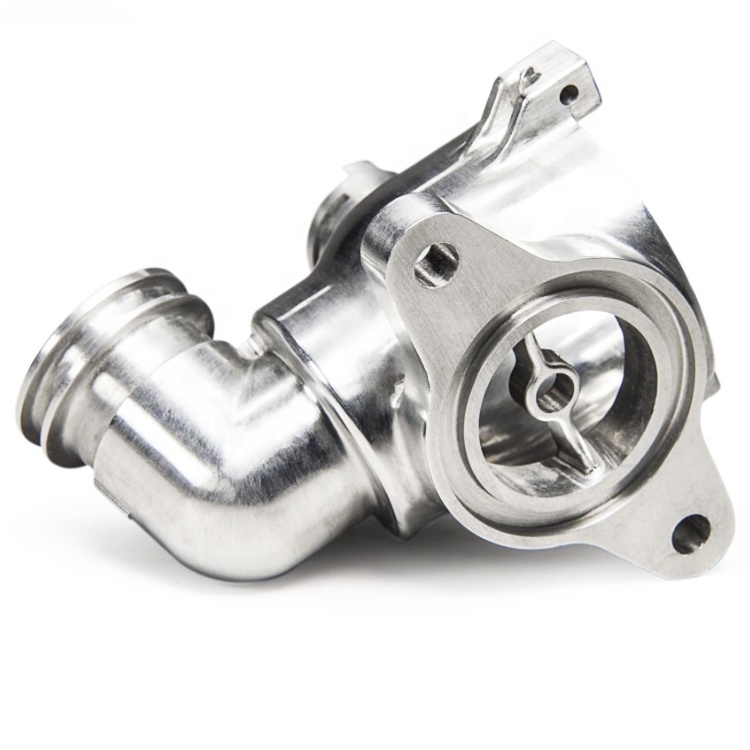
Thanks to high precision and capability for complex geometries, 5-axis machining is widely used across high end manufacturing sectors: aerospace special shaped brackets, medical cavities and related assemblies, custom automation connectors, new energy equipment housings and semiconductor tooling fixtures. These parts normally feature intricate geometry, tight tolerances and strict batch to batch consistency which are hard to achieve reliably with conventional 3-axis equipment.
4. Common Misconceptions & Practical Solutions for 5-Axis Machining
Poor precision experienced by many buyers often stems from improper process selection:
5-axis machining is not required for every part. Simple flat plates and standard shafts are more cost effective on 3-axis machines; unnecessary 5-axis processing increases costs.
Some manufacturers lack competent CAM programming, resulting in poor surface smoothness on curved surfaces. Always review tool path proposals before production.
Hard alloy materials tend to generate tool marks. Low speed finish milling combined with multiple finishing passes is recommended to guarantee surface quality.
5. Our 5-Axis Precision Machining Capabilities
We operate in house 5-axis equipment with 15 years in custom non-standard precision part manufacturing. Stable tolerance down to ±0.002 mm is achievable. We conduct in house CAM programming, in process dimensional monitoring and implement five stages inspection covering incoming material check, rough & finish machining and final verification. OEM and ODM custom orders are welcome. Surface treatments such as anodizing, sandblasting and passivation, etc are available via our qualified partner suppliers for one-stop delivery. If you need custom high precision complex parts, please send your CAD or STEP files. We offer free process evaluation, quotation and DFM optimization suggestions to mitigate manufacturing risks and secure good yield rates.
6. FAQ
What is the accuracy difference between 5-axis and 3-axis for complex parts?
Multiple setups can result in irreversible cumulative positioning errors, 3-axis machining typically achieves ±0.02 mm tolerance with witness line defects. Single setup 5-axis machining delivers stable ±0.002 mm tolerance with greatly improved part consistency and flatness.
Which parts require 5-axis machining?
Precision parts with free form surfaces, undercuts, deep angled cavities, multi angle profiles and thin wall intricate structures, widely used in aerospace, medical, new energy and automation industries.
Can surface finishing be applied to 5-axis machined aluminum parts?
Yes. Post processing options for 6061 / 7075 aluminum include anodizing, sandblasting and hard coat anodizing.
What is the tightest achievable tolerance with 5-axis machining?
Standard precision tolerance is ±0.005 mm. For ultra precision requirements, stable ±0.002 mm can be achieved to meet high end assembly specifications.
What are typical lead times for custom 5-axis complex parts?
3-5 working days for prototypes; 7-10 working days for small batch orders; 10-25 working days for mass production. Expedited scheduling is available upon request.
Can 5-axis machines process hard materials such as 303/304/316 stainless steel, titanium and tool steel?
Absolutely. 5-axis optimizes cutting paths for hard materials, reduces tool wear and part deformation, and solves excessive burr issues common with stainless steel, titanium and tool steel components.
Do you accept drawing based OEM / ODM non standard custom orders?
Yes. We are a custom parts manufacturing factory. We provide one stop services including DFM optimisation, CAM programming, machining and inspection for custom complex parts.
How do you guarantee yield rates for 5-axis machined parts?
We run five-step quality control workflows, including in process dimensional monitoring and final inspection with high precision measuring instruments. Inspection reports are provided.
What factors determine the price of complex precision parts?
Quotation depends on part complexity, material grade, tolerance requirements, order quantity and lead time. Highly complex parts need custom process planning based on drawings. Feel free to contact us for professional solutions.