
The Top Chinese Metal CNC Machining Partner
We Offer a Variety of Injection Molding Materials
Material selection determines whether a part works, lasts, can be made cost-effectively, and meets all functional and regulatory demands. Skipping this step leads to redesigns, production delays, or field failures.
Check out our wide selection of quality materials, those materials meeting the needs of different projects for strength, corrosion resistance, and specialized physical properties for customized parts by CNC machining, injection molding, sheet metal fabrication and 3D printing, vacuum casting, die casting for both prototyping and production stages.
Ready to elevate your production? Let’s go !
Why does material selection matter so much for custom parts?
Choosing the right material for custom parts is critical because it directly impacts performance, cost, manufacturability, and longevity.
Mechanical & Physical Properties
Application Environment
Manufacturing Compatibility
Cost & Lead Time
Surface Finish & Aesthetics
Regulatory & Safety Requirements
Custom Parts with More than 60+ Materials
Provide Various Materials Injection Molding One-Stop Services for Different Industries.
Polyoxymethylene (POM) is a highly crystalline engineering plastic. It has a distinct melting point, and once melted, its viscosity drops rapidly, offering excellent flowability. However, its molding shrinkage is relatively high, typically ranging from 1.5% to 2.5%.
Often call “acetal” or “steel-like plastic,” POM exhibits mechanical properties close to those of metals. It features high strength, high rigidity, and outstanding fatigue resistance, wear resistance, and self-lubricating properties, making it widely used in components such as gears and bearings.
Features of POM CNC Machining Materials
| Content | Description | Content | Description | Content | Description | Features | Typical Application | Cost |
| Density (g/cm³) | 1.41 – 1.42 | Melting temperature (℃) | 190-230 | Hardness (R Scale) | 120 – 127 | High strength / Good rigidity | Precision gears, bearings, valve seats, zippers, conveyor belt parts, clasps | ★★★☆☆ |
| Impact strength (kJ/m²) | 7 – 10 | Shrinkage rate (%) | 1.5-2.5 | Water Absorption | 0.2% – 0.5% |
Bracketing the prohibitive material costs and formidable processing conditions, PEEK injection molding represents the ultimate solution for high-performance precision parts destined for uncompromising environments—those characterized by high temperature, corrosion, and wear.
Features of PEEK Injection Molding Materials
| Content | Description | Content | Description | Content | Description | Features | Typical Application | Cost |
| Density (g/cm³) | 1.30 – 1.32 | Melting temperature (℃) | 360-400 | Hardness (R Scale) | 126 – 132 | High temperature resistant, resistant to chemicals (except concentrated sulfuric acid), high mechanical strength, wear-resistant, radiation-resistant. | Aerospace structural components, medical implants, semiconductor fixtures, high-temperature seals, oilfield parts, etc. | ★★★★★ |
| Impact strength (kJ/m²) | 7 – 10 | Shrinkage rate (%) | 1.0-1.5 | Water Absorption | 0.45% |
PMMA material known as acrylic or Plexiglas, is widely used in optical lenses, display panels, lampshades, and other high-transparency applications due to its excellent transparency, weathering resistance, high hardness, scratch-resistance, light weight and processability, making it suitable for electronics, automotive, medical equipment, architectural decoration industries, meeting the demands for aesthetics, durability and light weight. PMMA CNC machining parts are suitable for electronics, automotive, medical equipment and architectural decoration fields.
Features of PMMA CNC Machining Materials
| Type | Density (g/cm³) | Tensile Strength (MPa) | Tensile Modulus (MPa) | Heat deflection temperature (°C) | Impact strength (kJ/m²) | Hardness (R Scale) | Water Absorption | Thermal Expansion (µm/m°C) | Optical transmittance |
| Casting PMMA | 1.18 – 1.20 | 65 – 75 | 3100 – 3300 | 95 – 105 | 1.5 – 2.0 | 95 – 105 | 0.3% – 0.4% | 6.0 – 8.0 | 92%-93% |
| Extruded PMMA | 1.17 – 1.19 | 60 – 70 | 3000 – 3200 | 85 – 95 | 1.0 – 1.8 | 90 – 100 | 0.3% – 0.4% | 7.0 – 9.0 | 90%-92% |
| High Impact PMMA | 1.18-1.20 | 55-65 | 2800-3100 | 80-95 | 8.0 – 25.0+ | 85-100 | 0.3% – 0.5% | 7.0 – 10.0 | 85%-91% |
| UV Stabilized PMMA | 1.19-1.20 | 60-70 | 3000-3300 | 85-100 | 1.5 – 2.5 | 90-105 | 0.3% – 0.4% | 6.0 – 8.0 | 91%-92% |
ABS material is suitable for the manufacture of complex geometric parts as its excellent mechanical properties, impact resistance, toughness, and heat resistance. ABS material is easy to cut, has a smooth surface, easy to color and paint. ABS CNC machining parts commonly used in automotive parts, electronic housings & home appliances. Its insulating properties also make it suitable for electrical equipment.
Features of ABS CNC Machining Materials
| Type | Density (g/cm³) | Tensile Strength (MPa) | Tensile Modulus (MPa) | Heat deflection temperature (°C) | Impact strength (kJ/m²) | Hardness (R Scale) | Water Absorption | Thermal Expansion (µm/m°C) |
| General-purpose ABS | 1.04 – 1.06 | 40 – 47 | 2200 – 2500 | 85 – 95 | 20 – 30 | 105 – 115 | 0.20% – 0.45% | 6.5 – 9.5 |
| High-impact ABS | 1.03 – 1.05 | 35 – 42 | 1900 – 2200 | 85 – 95 | 35 – 50 | 100 – 110 | 0.25% – 0.50% | 7.0 – 10.0 |
| ABS Flame Retardant Grade | 1.08-1.10 | 30- 40 | 1400-1900 | 80-95 | 10-20 | 80-95 | 0.15% – 0.35% | 7.5 – 11 |
| Heat-resistant/electroplated grade ABS | 1.03 – 1.07 | 45 – 52 | 2300 – 2600 | 95 – 105 | 15 – 25 | 110 – 118 | 0.10% – 0.25% | 6.0 – 8.5 |
Provided that moisture is tightly controlled and the high shrinkage is acceptable, PA is well-suited for precision moving components that demand high strength, wear resistance, and oil tolerance.
Features of Nylon/PA Injection Molding Materials
| Content | Description | Content | Description | Content | Description | Features | Typical Application | Cost |
| Density (g/cm³) | 1.20 – 1.22 | Melting temperature (℃) | 260-310 | Hardness (R Scale) | 118 – 123 | Ultra-high impact strength, high transparency, good dimensional stability, and excellent electrical insulation properties. | Headlights lenses, safety helmets, mobile phone casings, etc. | ★★★☆☆ |
| Impact strength (kJ/m²) | 15 – 25 | Shrinkage rate (%) | 0.5-0.7 | Water Absorption | 0.20% |
PP injection molding is ideal for low-cost, high-volume general-purpose parts that demand chemical resistance — though trade-offs include high shrinkage and low rigidity.
Features of PP Injection Molding Materials
| Content | Description | Content | Description | Content | Description | Features | Typical Application | Cost |
| Density (g/cm³) | 0.90 – 0.91 | Melting temperature (℃) | 200-260 | Hardness (R Scale) | 60-70 | The lightest general-purpose plastic, with excellent fatigue resistance. | Car bumpers, instrument panels, food containers, medical devices, household appliance components, etc. | ★★☆☆☆ |
| Impact strength (kJ/m²) | 3-6 | Shrinkage rate (%) | 1.0-2.5 | Water Absorption | < 0.01 |
PE injection molding is ideal for parts demanding low cost, high throughput, chemical resistance, and good flexibility — though the trade-offs include significant shrinkage and poor thermal stability.
Features of HDPE Injection Molding Materials
| Content | Description | Content | Description | Content | Description | Features | Typical Application | Cost |
| Density (g/cm³) | 0.945 – 0.955 | Melting temperature (℃) | 180-240 | Hardness (R Scale) | 60-70 | Resistant to chemical corrosion, good toughness, excellent low-temperature impact resistance (-50℃ maintains toughness), and low cost | Household items, chemical containers, toys, etc. | ★★☆☆☆ |
| Impact strength (kJ/m²) | High | Shrinkage rate (%) | 1.5-3.0 | Water Absorption | < 0.01 |
PC injection molding is ideal for precision components demanding optical clarity, impact strength, and dimensional stability, provided that strict pre-drying and management of high melt viscosity are enforced.
Features of PC Injection Molding Materials
| Content | Description | Content | Description | Content | Description | Features | Typical Application | Cost |
| Density (g/cm³) | 1.20 – 1.22 | Melting temperature (℃) | 260-310 | Hardness (R Scale) | 118 – 123 | Ultra-high impact strength, high transparency, good dimensional stability, and excellent electrical insulation properties. | Headlights lenses, safety helmets, mobile phone casings, etc. | ★★★☆☆ |
| Impact strength (kJ/m²) | 15 – 25 | Shrinkage rate (%) | 0.5-0.7 | Water Absorption | 0.20% |
PPS injection molding is ideal for precision components that demand high heat resistance (up to 260°C), chemical resistance, and excellent rigidity. However, it requires a high mold temperature (130-150°C), and the material itself is relatively brittle.
Features of PPS Injection Molding Materials
| Content | Description | Content | Description | Content | Description | Features | Typical Application | Cost |
| Density (g/cm³) | 1.35 – 1.42 | Melting temperature (℃) | 300-340 | Hardness (R Scale) | 85-90 | High rigidity, with excellent heat resistance up to 200℃, and extremely strong chemical resistance. | Automobile sensors, electronic and electrical components, chemical-resistant pump bodies, high-temperature connectors, etc. | ★★★☆☆ |
| Impact strength (kJ/m²) | medium | Shrinkage rate (%) | 0.5-1.4 | Water Absorption | <0.05% |
PEI injection molding is ideal for precision components that demand high-temperature resistance (up to 170°C), high strength, and inherent flame retardancy. However, it necessitates high mold temperatures (130-180°C) and rigorous drying.
Features of PEI Injection Molding Materials
| Content | Description | Content | Description | Content | Description | Features | Typical Application | Cost |
| Density (g/cm³) | 1.27 | Melting temperature (℃) | 340-400 | Hardness (R Scale) | 85-90 | Amorphous high-temperature material, naturally flame-retardant | Medical/electronic enclosures, aircraft interior components, high-temperature resistant connectors, etc. | ★★★★☆ |
| Impact strength (kJ/m²) | Extremely high | Shrinkage rate (%) | 0.5-0.7 | Water Absorption | 0.25% |
PVC is an ideal material for applications that demand low cost, chemical resistance, and natural flame retardancy, despite its challenging processing characteristics and limited heat resistance.
Features of PVC Injection Molding Materials
| Content | Description | Content | Description | Content | Description | Features | Typical Application | Cost |
| Density (g/cm³) | 1.38 – 1.45 | Melting temperature (℃) | 170-210 | Hardness (R Scale) | 74 – 81 | Flame-retardant, inexpensive, corrosion-resistant | Corrosion-resistant pipe fittings, electrical insulation components, commercial machine enclosures, and medical device enclosures, etc. | ★★☆☆☆ |
| Impact strength (kJ/m²) | 3-10 | Shrinkage rate (%) | 0.2-0.6 | Water Absorption | 0.2-0.6% |
PS injection molding is ideal for low-cost, easy-to-mold, and high-rigidity parts (both transparent and opaque). However, the material is brittle and has poor heat resistance.
Features of PS Injection Molding Materials
| Content | Description | Content | Description | Content | Description | Features | Typical Application | Cost |
| Density (g/cm³) | 1.04 – 1.09 | Melting temperature (℃) | 180-240 | Hardness (R Scale) | 65-75 | Transparent, hard, easy to process, low in price | Stationery, toys, cosmetic packaging, etc. | ★★☆☆☆ |
| Impact strength (kJ/m²) | Low | Shrinkage rate (%) | 0.4-0.7 | Water Absorption | <0.2% |
PBT (Polybutylene Terephthalate) is suitable for electronic/automotive parts requiring chemical resistance, good electrical insulation, and high rigidity, but it requires strict pre-drying and has a high shrinkage rate.
Features of PBT Injection Molding Materials
| Content | Description | Content | Description | Content | Description | Features | Typical Application | Cost |
| Density (g/cm³) | 1.27 | Melting temperature (℃) | 230-260 | Hardness (R Scale) | 75-85 | Excellent electrical insulation properties, standard material for the connector industry | Automobile electrical connectors, relays, ignition coil casings, optical fiber sheaths, electric tool casings, etc. | ★★★☆☆ |
| Impact strength (kJ/m²) | Medium | Shrinkage rate (%) | 1.3-2.4 | Water Absorption | High |
TPU (Thermoplastic Polyurethane) is suitable for overmolding or shock-absorbing parts requiring high elasticity, wear resistance, and softness, but it requires strict pre-drying and has a narrow processing window.
Features of TPU Injection Molding Materials
| Content | Description | Content | Description | Content | Description | Features | Typical Application | Cost |
| Density (g/cm³) | 1.27 | Melting temperature (℃) | 190-230 | Hardness (R Scale) | 60-95 | Rubber elastomer, with the best wear resistance | Mobile phone cases, air cushions, hoses, cable sheaths, sealing rings, mechanical shock-absorbing pads, etc. | ★★★☆☆ |
| Impact strength (kJ/m²) | Extremely high | Shrinkage rate (%) | 0.5-1.5 | Water Absorption | High |
Blog & News
What is a CNC Machining Center?
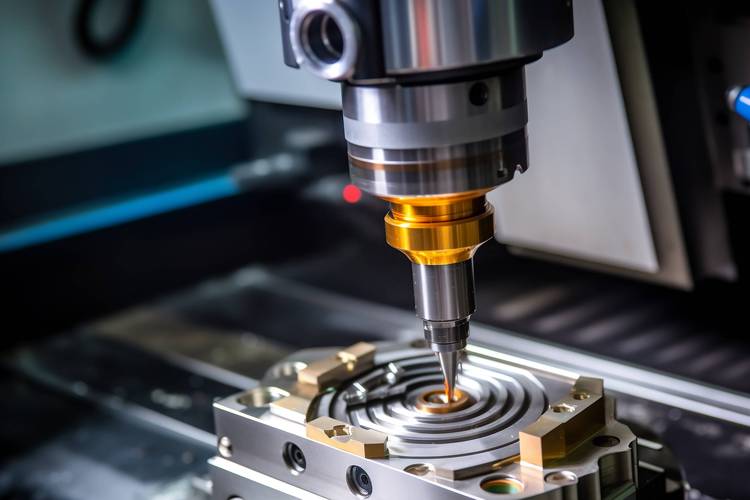
A CNC machining center is an advanced, computer-controlled machine tool capable of performing multiple machining operations—such as milling, drilling, tapping, boring, and sometimes turning.
Ashely . March 9, 2026
How many kinds of Types in CNC Machining Centers?
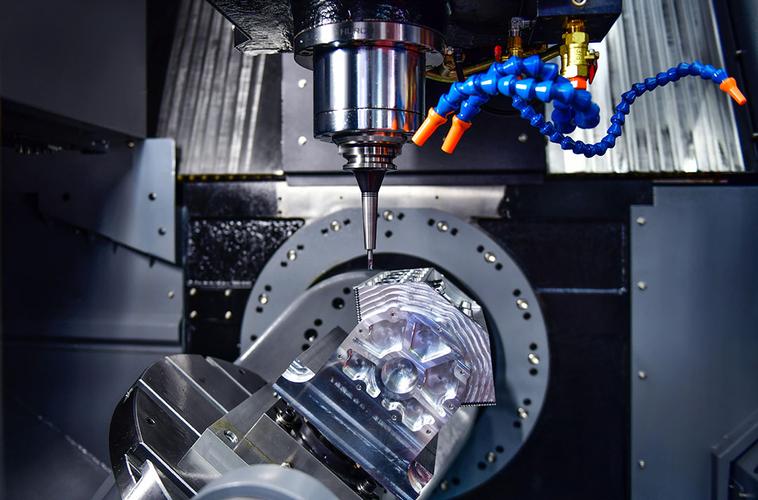
There are at least 5 different CNC lathes type in Machining Centers: Vertical Machining Center, Horizontal Machining, 5-Axis Machining Center, Gantry / Bridge Mill, Turn-Mill Center (Multi-Tasking).
Ashely . March 9, 2026
What is CNC Machining?
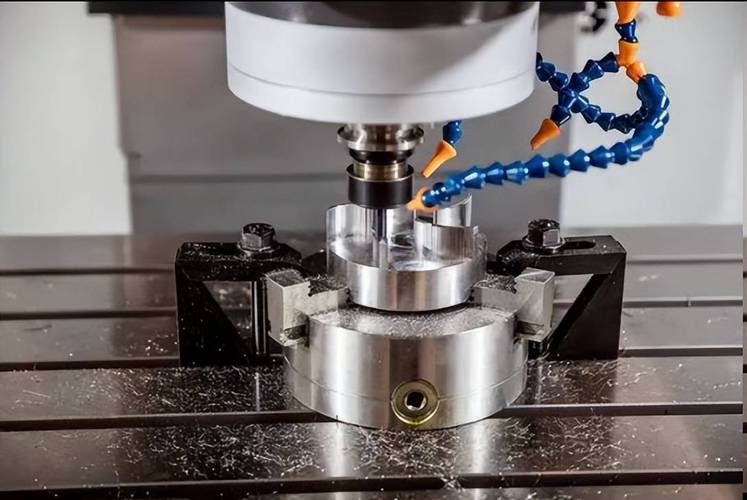
CNC (Computer Numerical Control) machining is a subtractive manufacturing process in which pre-programmed computer software controls the movement of factory tools and machinery to remove material from a solid workpiece, creating a finished part or product.
Ashely . March 9, 2026
Would you like to start a project with us?
FAQs About Our Injection Molding Materials
What are the key factors when selecting an injection molding material?
Key considerations include:
Mechanical properties – strength, stiffness, toughness, impact resistance
Operating environment – temperature, chemicals, UV exposure, or moisture
Aesthetic requirements – surface finish, color, transparency
Regulatory compliance – FDA, RoHS, UL, etc.
Cost – material price vs. production volume
What kind of quality assurance or warranty do you offer on orders?
One of the reasons engineers purchase from RPD is that we take on all the risks for you. We guarantee you’ll love what you get. Not happy with it? We’ll either redo it or give you a full refund. Your purchase is completely risk-free.
How do I choose the right material for my part?
It depends on your application, functional needs, and budget. For material support, pls contact our team, we will send you suitable solution.
What kind of injection molding materials do you use for production?
We only use brand-new plastics and can provide relevant certifications such as CE and RoHS.