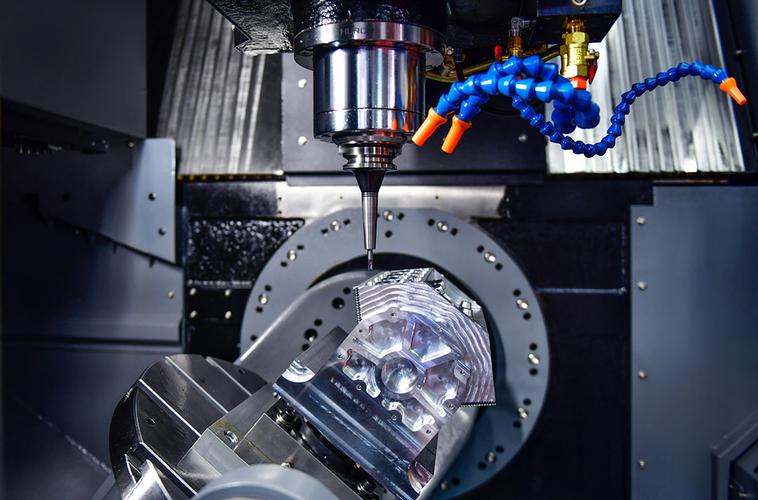
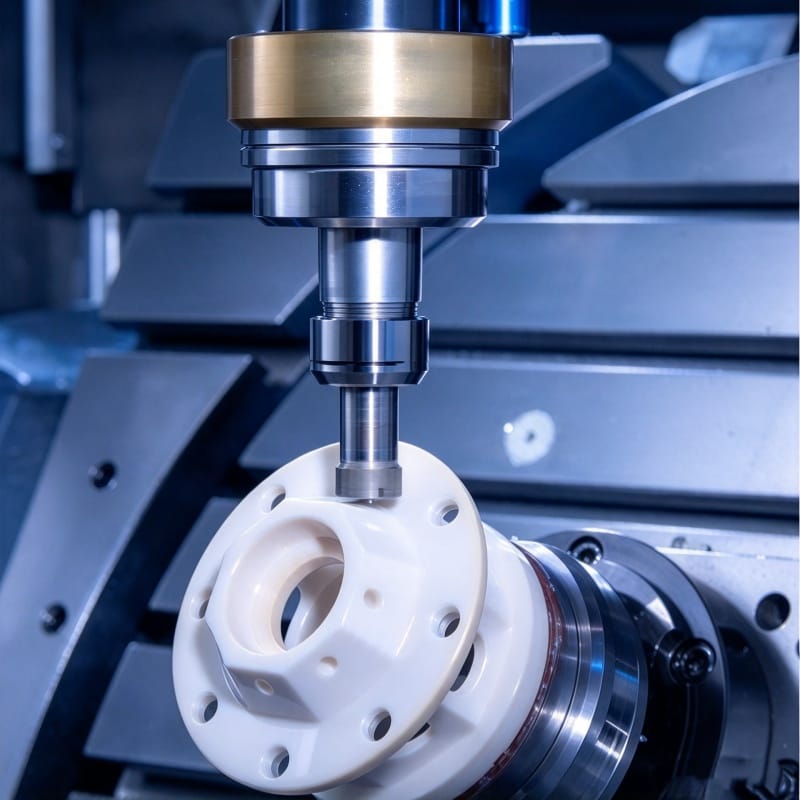
When metals and engineering plastics fail under extreme heat, heavy corrosion and high-voltage insulation, high-performance engineering machined ceramics parts are the top choice. Ceramic CNC machining fabricates brittle ceramic blanks into precision custom parts, with alumina, zirconia, SiC and Macor as the most common grades.
This guide compares the four on properties, machining difficulty, tolerances, surface finish and cost, to reduce manufacturing risks in design and balance precision, performance and budget.
Blog of Outline
1.Precision Ceramic CNC Machining Materials Comparison
Material | Core Strengths | Machining Notes | Typical Use / Ceramic Replacement Scenario | Cost Tier |
Alumina (Al₂O₃, 99.7%) | 1600°C high temp resistance, excellent wear / corrosion resistance, strong electrical insulation | Hard structural ceramic; requires diamond tooling, medium-high difficulty, supports ultra-tight tolerances | Standard high-performance ceramic baseline; no lower-cost substitute for high-heat / high-wear insulation duty | Mid |
Zirconia (3Y-TZP) | Highest fracture toughness among structural ceramics, outstanding wear resistance, biocompatible | Requires diamond tooling; lower chipping risk than alumina, supports complex curved surfaces | Impact-resistant ceramic parts; replaces alumina in applications where brittleness causes premature failure | Mid-High |
Silicon Carbide (SiC) | Extreme hardness & wear resistance, 1600°C heat resistance, high thermal conductivity | Hardest grade to machine; severe diamond tool wear, only cost-effective for simple geometries | Extreme corrosion / wear / ultra-high-heat scenarios; no direct metal / plastic substitute | High |
Macor (Glass-Ceramic) | Best machinability of all advanced ceramics, zero sintering shrinkage, CTE matched to metals | Machinable with standard carbide tools; supports full milling, drilling and tapping | Precision prototyping & complex ceramic parts; replaces hard ceramics for fast, low-risk small-batch production | Mid-High |
2.Core Machinable Ceramic CNC Machining Challenges
As brittle materials, machinable ceramics follow completely different machining logic than metals.
The first challenge is exit chipping and microcracks.
The second is rapid tool wear and difficulty maintaining dimensional consistency.
The third is dimensional distortion from residual stress release.
The last is ceramic geometry machining limits: Metal style features are often unmanufacturable.
3. Precision Ceramic CNC Machining Tolerance
Tolerance Type (ASME Y14.5) | Macor (Machinable Glass-Ceramic) | Alumina (99.7% Al₂O₃) | Zirconia (3Y-TZP) | Silicon Carbide (SiC) |
Linear Dimension(Size Tolerance) | Standard: ±0.02 mm Precision: ±0.005 mm | Standard: ±0.01 mm Precision: ±0.003 mm | Standard: ±0.01 mm Precision: ±0.003 mm | Standard: ±0.025 mm Precision: ±0.008 mm |
Flatness | Standard: 0.01 mm Precision: 0.002 mm | Standard: 0.005 mm Precision: 0.001 mm | Standard: 0.005 mm Precision: 0.001 mm | Standard: 0.01 mm Precision: 0.003 mm |
Parallelism | Standard: 0.015 mm Precision: 0.003 mm | Standard: 0.008 mm Precision: 0.002 mm | Standard: 0.008 mm Precision: 0.002 mm | Standard: 0.015 mm Precision: 0.004 mm |
Perpendicularity | Standard: 0.02 mm Precision: 0.005 mm | Standard: 0.01 mm Precision: 0.003 mm | Standard: 0.01 mm Precision: 0.003 mm | Standard: 0.02 mm Precision: 0.006 mm |
Concentricity / Total Runout | Standard: 0.02 mm Precision: 0.005 mm | Standard: 0.01 mm Precision: ±0.003 mm | Standard: 0.01 mm Precision: ±0.003 mm | Standard: 0.025 mm Precision: 0.008 mm |
Surface Finish (Ra) | Standard: 1.6–3.2 µm Precision: 0.4–0.8 µm | Standard: 0.4–0.8 µm Precision: 0.05–0.2 µm | Standard: 0.4–0.8 µm Precision: 0.05–0.2 µm | Standard: 0.8–1.6 µm Precision: 0.2–0.4 µm |
4. DFM Tips
First, don’t apply tight tolerances to every dimension. Only specify high precision for fit dimensions, and use general tolerances for non-fit features. This can cut cost by more than half.
Second, for hard-to-hold tolerances like hole position and thin-wall flatness, relax them as much as possible, or discuss reasonable tolerance values with us upfront.
5. Machinable Ceramic Machined Parts Surface Finishing Options
Finish Type | Compatible Ceramics | Achievable Surface Roughness (Ra) | Key Advantages | Typical Applications |
As-Machined / Standard Ground Finish | Alumina, Zirconia, SiC, Macor | Macor: 1.6–3.2 µm (63–125 µin)Alumina / Zirconia: 0.4–0.8 µm (16–32 µin)SiC: 0.8–1.6 µm (32–63 µin) | Lowest cost, shortest lead time, preserves nominal dimensional accuracy | Structural insulators, tooling fixtures, non-sealing mounting surfaces, general-purpose ceramic components |
Precision Lapped & Polished Finish | Alumina, Zirconia, SiC (full polishing); Macor (light polishing only — high-gloss polishing risks surface pitting) | Standard precision polish: 0.05–0.2 µm (2–8 µin)Ultra-precision mirror finish: 0.005–0.02 µm (0.2–0.8 µin) | Exceptional flatness and parallelism, minimal friction, hermetic sealing capability, optical-grade transparency for transparent ceramics | Pump valve seal faces, ceramic plungers, optical windows, semiconductor wafer chucks, metrology reference surfaces |
Bead Blasted Matte Finish | Alumina, Zirconia, SiC; Not recommended for Macor (soft matrix is prone to surface pitting and chipping) | 1.6–6.3 µm (63–250 µin), adjustable via media grit size | Uniform cosmetic appearance, improved adhesion for bonding/coating, increased surface friction, hides minor surface imperfections | Cosmetic exterior parts, adhesive bonding surfaces, wear liners, robotic gripper faces |
Ceramic Metallization | Alumina (most common), Zirconia, SiC; Not recommended for Macor (process temperatures exceed its thermal limit) | Base surface roughness of 0.8–1.6 µm (32–63 µin) required for reliable coating adhesion | Enables vacuum-tight ceramic-to-metal brazing, creates conductive paths, supports high-voltage feedthrough assembly, hermeticity up to 10⁻¹² Pa·m³/s | Vacuum electronics, semiconductor packages, high-voltage insulators, microwave components, sensor housings |
DLC (Diamond-Like Carbon) Coating | Alumina, Zirconia, SiC | Base surface ≤ 0.2 µm (8 µin) recommended; coating thickness 1–5 µm | Surface hardness up to 2000–3000 HV, low coefficient of friction (~0.1), extends wear life by 3–5x vs. bare ceramic | High-precision wear components, ceramic bearings, valve spools, textile guide pins |
Edge Breaking & Chamfering | All ceramics, especially critical for brittle hard grades (Alumina, SiC) | Standard chamfer: C0.1–C0.5 mmStandard radius: R0.1–R0.3 mm | Eliminates stress concentration, reduces chipping risk during assembly and handling, improves coating adhesion at edges | Standard practice for all precision ceramic parts; mandatory for load-bearing and assembly-critical components |
Critical Design Notes
- All finishing operations are performed post-sintering for structural ceramics. Macor exhibits zero sintering shrinkage, so it delivers the most consistent dimensional results after finishing.
- Ultra-precision polishing may relax linear dimensional tolerances. Always specify priority on drawings: dimensional accuracy first, or surface finish first.
- Metallization, DLC, and other coating processes add thickness to the part; reserve coating allowance in your nominal design dimensions.
- Thin-wall, sharp-corner, and deep-hole features are not compatible with high-pressure blasting processes due to elevated cracking and chipping risk.
6.Custom Machinable Ceramic CNC Machined Parts Cost Factors
Machinable ceramic materials and machining costs vary greatly.
Cost Factor | Cost Impact | Cost-Saving Tip |
Raw Material Grade | Material makes up 30–60% of total part cost. Premium grades like Macor and AlN can cost 3–5x more than budget mullite-based ceramics. | Choose the lowest-cost grade that meets your performance requirements; use mullite for high-volume, low-precision projects. |
Part Geometry & Complexity | Thin walls, deep holes, internal threads and complex contours raise tool wear, setup time and scrap risk. Complex parts can cost 2–5x more than simple flat/plate components. | Simplify geometries, add generous break radii to sharp corners, and avoid extreme depth-to-diameter ratios for holes. |
Tolerance & Surface Finish | Each step up in precision or surface quality adds dedicated grinding/lapping operations. Tightening tolerances one grade typically increases cost by 30–100%. | Apply tight tolerances and premium finishes only to critical functional surfaces; relax specs on non-mating faces. |
Production Batch Size | Small-batch orders (1–10 pcs) carry heavy setup, programming and tooling amortization. Unit price can drop by 60–80% at economic volume (50+ pcs). | Consolidate orders to reach volume pricing, and order extra spare parts to avoid repeat small-batch setup fees. |
Secondary Operations | Metallization, DLC coating, bead blasting and CMM inspection each add 15–50% to total cost, plus external processing lead time. | Limit special treatments only to required surfaces; skip cosmetic finishes for internal or non-visible components. |
Material Machinability & Scrap | Harder, more brittle grades cause faster diamond tool wear and higher chipping/cracking scrap rates. ZTA and AlN machining costs are 40–80% higher than Macor. | Prioritize more machinable grades for complex features; design in extra edge stock to absorb minor chipping and reduce scrap. |
7. Machinable Ceramic CNC machining Materials Quick Selection
Material Grade | Core Advantage | Ideal Applications | Not Recommended For |
Macor (Mica Glass-Ceramic) | Best machinability of all advanced ceramics; supports tapping and tight tolerances; zero sintering shrinkage | Complex precision fixtures, semiconductor tooling, optical mounts, fast-turn prototyping, vacuum insulators | Long-term use above 800°C, strong acid-base corrosion, high-wear load-bearing structures |
Hexagonal Boron Nitride (h-BN) | Excellent high-temperature stability; self-lubricating; superior high-frequency electrical performance | High-temperature furnace insulators, semiconductor heat spreaders, mold release liners, high-frequency electronics | Load-bearing structural parts, internal thread features, long-term humid/water environments |
Mullite-Based Machinable Ceramic | Lowest material cost (~1/3 of Macor); 1200°C continuous service temperature; good chemical stability | High-volume furnace linings, low-precision insulating supports, cost-sensitive industrial kiln components | Precision parts with tolerances tighter than ±0.0005″, complex curved surfaces, thin-wall features |
ZTA-Based Machinable Ceramic | High flexural strength (~3x Macor); excellent wear resistance; moderate impact toughness | Wear-resistant structural parts, pump and valve seals, insulating parts with medium impact requirements | Complex contoured shapes, small-diameter deep holes, high-precision tight-tolerance projects |
Aluminum Nitride (AlN) Machinable Ceramic | Ultra-high thermal conductivity (~180 W/m·K); CTE closely matched to silicon wafers; strong electrical insulation | Power semiconductor heat sinks, LED heat dissipation bases, high-heat electronic component insulators | Low-budget projects, load-bearing structural parts, high mechanical shock applications |
8. Summary
The core of ceramic part selection is considering manufacturability early on. Don’t wait until your drawing is finalized to discover the part can’t be machined or costs too much. We recommend consulting with us in the design stage for DFM manufacturability analysis, optimizing material selection and structural design. This way you meet performance requirements while keeping cost and lead time within reasonable bounds.
Welcome you reference our CNC materials selection page & click our other blog of CNC stainless steel guide, carbon steel grade selection, CNC machined alloy steel material selection, Invar low expansion alloy, Inconel CNC machining, Aluminum CNC materials Selection. If you have machining needs for ceramic parts, contact our engineering team for a custom ceramic machined quote. We’ll provide free DFM analysis and a customized machining solution.
9. FAQ
1.What’s the difference between machinable ceramic and regular alumina ceramic?
The core difference is machinability. Regular alumina ceramic is extremely hard, can only be ground after sintering, and complex features are very difficult to produce.
2.Which is better for high-temperature applications: Macor or hexagonal boron nitride?
Hexagonal boron nitride is better for high-temperature scenarios. Macor has a continuous use temperature of 800°C, while hexagonal boron nitride reaches 900°C in air and 2000°C in inert atmosphere — far superior high-temperature stability.
3. Can machinable ceramic parts be mirror polished?
Yes. Dense machinable ceramics like Macor and aluminum nitride can be lapped and polished to mirror-level roughness of Ra 0.025μm, suitable for optical, sealing and vacuum applications.
4. Can you tap internal threads in Macor material?
Yes. Macor is one of the few ceramic materials that can be directly tapped, supporting internal threads M3 and larger. Other machinable ceramics are more brittle, so direct tapping generally isn’t recommended, we suggest embedded metal thread inserts instead.
5. Can ceramic parts be CNC machined the same way as metal parts?
Not exactly. Machinable glass-ceramics like Macor can be milled, drilled, bored, and tapped with standard carbide tooling, with a cutting feel similar to soft metals. However, hard structural ceramics (alumina, zirconia, SiC) require diamond grinding and lapping tooling exclusively.
6. Why are CNC-machined ceramic parts more expensive than metal parts?
Three key factors push ceramic machining costs up: high-purity ceramic blanks cost far more than aluminum or 316L stainless steel; diamond tools wear fast and are expensive; brittle ceramics demand slower feeds, longer cycle times and carry higher scrap risks from chipping and microcracks. For simple parts, ceramics often cost 2–5× more than stainless steel.
7. How do you prevent chipping and cracking during ceramic machining?
We reduce breakage via process control and design tweaks. In production, we use sharp diamond tools, shallow cuts, low feeds and rigid fixturing to cut vibration; chamfers or radii are standard on all sharp edges. For design, avoid sharp internal corners, high hole depth-to-diameter ratios and ultra-thin walls. Add 0.1–0.3 mm edge stock to limit exit chipping.
Share this article