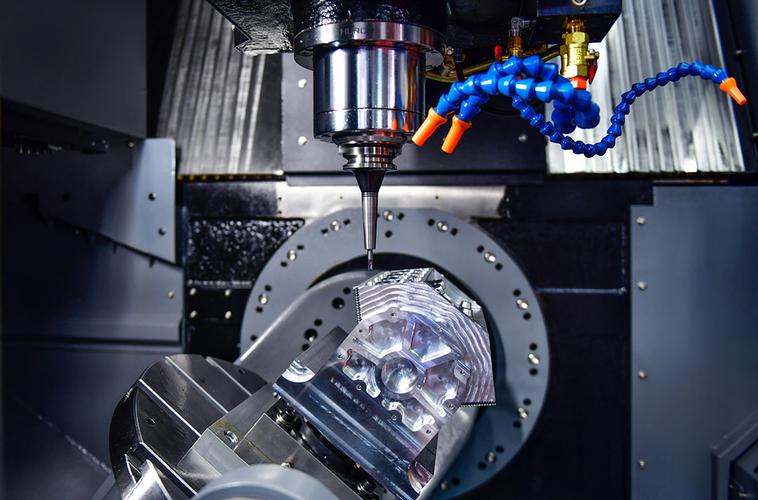
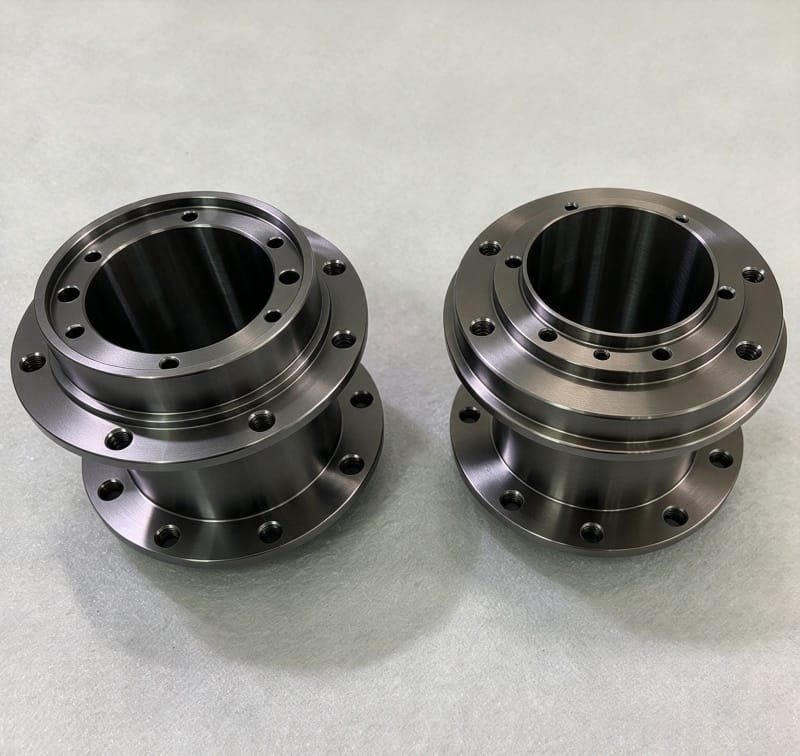
Beyond standard CNC machining materials like aluminum, stainless steel, copper, steel, titanium and engineering plastics, Inconel and nickel-based super alloys are a frequent choice for aerospace, gas turbine, oil & gas, deep-sea equipment, chemical processing and semiconductor equipment projects.
This guide compares mainstream nickel superalloy grades, breaks down core Inconel and other nickel based supper alloy machining challenges, provides actionable tolerance and DFM design specifications. We also cover surface treatment options, full cost breakdowns and practical selection tips to help you balance operating performance, manufacturability and production cost.
Blog Outline
1. Common Inconel & Nickel Superalloy Grades
Performance & Machinability Comparison
The nickel superalloy family is large, but only a limited number of grades are practical for high-volume CNC machining. The table below covers the most widely used commercial grades, including Inconel, Incoloy iron-nickel alloys, Hastelloy and Monel.
Market Share Rank | Alloy Grade/UNS/EN material number | Key Machining Challenges | Relative Material Cost (304 SS = 1.0) | Typical Applications |
1 | Inconel 718/N07718/2.4668 | Extremely high strength after age hardening, severe work hardening, thread chipping risk, thin-wall distortion; requires heat treatment coordination | 7.5 | Turbine disks, fasteners, downhole oil & gas components |
2 | Inconel 625/N06625/2.4856 | Severe work hardening, Mo/Nb abrasive wear, poor deep-hole chip evacuation | 6.8 | Chemical corrosion-resistant valve bodies, deep-sea marine components |
3 | Hastelloy C276/N10276/2.4819 | High Mo/W content creates extreme cutting forces; severe work hardening; high tooling cost | 9.0 | Heavy-duty chemical processing equipment |
4 | Inconel 600/N06600/2.4816 | Moderate work hardening, chip sticking, springback in thin walls | 4.5 | Heat treatment furnace components, high-temperature pipe fittings |
5 | Incoloy 800H/N08810/1.4958 | Iron-nickel base, better machinability than pure nickel alloys; prone to built-up edge at high temperatures | 3.2 | 600°C-class medium-temperature equipment, furnace tubes |
6 | Inconel 825/N08825/2.4858 | Moderate work hardening, noticeable chip sticking, hard to control surface finish | 5.0 | Chemical corrosion environment components |
7 | Monel 400/N04400/2.4360 | Copper-nickel alloy; severe chip sticking, poor chip breaking, prone to continuous tool marks | 5.5 | Seawater service components |
8 | Inconel X750/N07750/2.4669 | Precipitation-hardened; machining difficulty spikes after heat treatment; tool dwell causes surface hardening; thin-wall springback | 7.2 | High-temperature springs, sealing rings, aerospace load-bearing parts |
9 | Inconel 601/N06601/2.4851 | High hot strength, high cutting forces, rapid tool wear | 5.2 | Radiant tubes, furnace rolls, heat treatment tooling |
10 | Inconel 706/N07706/2.4697 | Easier to machine than 718; better weldability | 6.1 | Large-size turbine disks, annular load-bearing parts |
Cost baseline: 304 stainless steel = 1.0 (bulk bar stock, reference only). Fully finished cost includes labor, tool wear, scrap and heat treatment. Premium grades cost 8–12× 304; age-hardened alloys carry ~30% extra cost.
2. Core Machining Challenges & Process Route Options
2.1 Main Typical Machining Challenge of CNC Machined Inconel & supper alloy Parts
- Severe work hardening
- Poor thermal conductivity
- Tool sticking and built-up edge
- Residual stress distortion
2.2 Two Complete Process Routes
Option A | High-Precision Aerospace / Sealing Load-Bearing Parts (tolerance ≤ ±0.025 mm)
Rough machining → Stress relief annealing (650°C hold for 2 hours) → Semi-finishing → Second stress relief → Finishing Pros: Maximizes residual stress release and minimizes springback distortion. Cons: Longer process flow, roughly 35% higher cost.
Option B | Standard Chemical Non-Load-Bearing Structural Parts
Leave 0.25–0.4 mm finishing stock after rough machining, then complete semi-finishing and finishing in one flow, skipping intermediate stress relief. Pros: Shorter lead time, lower cost. Limitations: Thin-wall part tolerances must be relaxed.
For precipitation-hardened alloys, always machine in the annealed condition unless you have a specific strength requirement. Age-hardened material has much higher cutting resistance, reduces tool life by 50–60%, and raises total machining cost by 30–45%. For high-precision load-bearing parts, we recommend completing rough and finish machining before age hardening, or only removing a small finishing stock after heat treatment.
2.3 Process Tips for Custom CNC Machined Inconel Part
- Thin-walled parts:Multi-step stress relief required. For walls <1 mm (0.04 in), add auxiliary supports; avoid single-pass finishing. Recommended min wall thickness: 1.5 mm (0.06 in).
- Deep hole machining:Twist drills for L/D ≤ 3:1; gun drills for 3:1 ~ 6:1. For L/D >6:1, tubular stock is strongly recommended to cut machining depth and scrap. With through-tool high-pressure coolant, gun drilling can reach 10:1, but scrap risk increases sharply.
- Thread machining:Thread milling preferred for hardened materials — 3×+ longer tool life and lower scrap than tapping. For small threads: rough before heat treatment, finish after aging to prevent chipping.
- Deep slot machining:Limit slot depth ≤ 3× tool diameter and depth-to-width ≤3:1 to avoid built-up edge and poor chip evacuation.
- Slender shafts:Maintain L/D ≤8:1. Auxiliary support fixturing is needed for longer shafts; otherwise straightness cannot be guaranteed.
3. Tolerance Control & DFM Guidelines (ASME Y14.5)
Due to work hardening, spring back and thermal expansion, tolerance for high-temperature alloys differs from standard steel.
3.1 Production-Proven Tolerance Reference
Size Range | Economic Production Tolerance (high yield rate) | Precision Tolerance (requires grinding / temperature-controlled inspection) | Notes |
≤ 1 inch (25.4 mm) | ±0.002 inch (±0.05 mm, IT8), >98% yield | ±0.0005 inch (±0.0127 mm, IT5) with grinding, 40–60% cost increase | We don’t recommend tolerances tighter than ±0.0002 inch for production,stability is extremely poor |
1–6 inch (25.4–152.4 mm) | ±0.003 inch (±0.076 mm, IT9) | ±0.001 inch (±0.0254 mm, IT6), requires temperature-controlled inspection | Thin-wall parts require even looser tolerances |
> 6 inch (152.4 mm) | ±0.005 inch (±0.127 mm, IT10) | ±0.002 inch (±0.05 mm), requires multiple stress relief steps | Higher risk of stress distortion on large parts |
Additional rules:
- For internal features like holes, slots and threads, relax tolerances by 1–2 grades.
- Economic geometric tolerance accuracy: 0.002 inch per inch. Tighter geometric requirements drastically increase fixturing and inspection costs.
- For thin-wall parts under 1.5 mm wall thickness, relax tolerances to at least ±0.08 mm (±0.003 inch) — stress distortion can’t be fully eliminated.
3.2 DFM Design Best Practices
- Keep wall thickness at least 1.5 mm; add reinforcing ribs for thin-wall structures.
- Use internal corner radii of at least 0.8 mm (0.03 inch). Sharp internal corners usually require EDM, which roughly doubles machining cost.
- Avoid deep slots and flat-bottom blind holes where possible. Use standard drill point angles for blind hole bottoms to avoid extra operations. Keep deep slot depth-to-width ratio ≤ 3:1.
- Keep slender shaft length-to-diameter ratio ≤ 8:1; add auxiliary support for extra-long parts.
- Match heat treatment to precipitation-hardened alloys: For high-precision parts, finish after heat treatment to offset distortion. For low-precision parts, complete all machining before heat treatment to simplify the process.
- Avoid over-engineering: Only apply tight precision to 10–20% of critical mating surfaces. Relax tolerances on non-mating faces, and lower finish requirements on non-sealing surfaces. Combining ultra-high precision with mirror finish across the entire part will multiply labor hours.
4. Surface Treatments for Custom CNC Machined Inconel Parts
Nickel-based alloys naturally resist high temperatures and corrosion, but different operating conditions require matched surface treatments.
Surface Treatment | Roughness Ra | Ideal Operating Conditions | Key Notes & Cost Impact |
As-machined | 3.2 μm (125 μin) | Non-mating cosmetic structural parts | Standard finish milling, no post-processing |
Precision machined | 1.6 μm (63 μin) | General clearance mating surfaces | Adds a finish pass; 10–15% cost increase |
Mechanical grinding / surface grinding | 0.05–0.8 μm (2–32 μin) | High-precision mating, sealing and friction surfaces | CNC milling can’t reliably achieve Ra 0.4 μm consistently,surface grinding or cylindrical grinding is required. Cost increases by 50% or more. |
Passivation | Retains as-machined roughness | General corrosion-resistant structural parts | Forms a dense chromium oxide film, removes free iron contamination, barely changes dimensions. Costs only 2–5% of machining cost; standard post-treatment for high-temperature alloys. |
Electropolishing (EP) | 0.025–0.4 μm (1–16 μin) | High-cleanliness parts for semiconductor, medical industries | Delivers high finish and passivation in one step; Less uniform on complex geometries. Removes a small amount of material, so leave allowance before machining. Costs 5–10 times more than standard passivation. |
Shot peening | 3.2–12.7 μm (125–500 μin) | Aerospace high-fatigue load parts | Introduces compressive residual stress to improve fatigue strength. Increases roughness,a finish grind is required if a smooth surface is needed. |
Functional coatings | 0.0005–0.002 inch coating thickness | Ultra-high temperature, wear-resistant applications | Improves oxidation and wear resistance. High cost, and coating thickness adds tolerance variation. Not recommended for high-precision mating surfaces. |
Note: Don’t specify Ra 0.4 μm across every non-sealing surface. A full-part mirror finish requirement will roughly double your quote.
5. Cost Drivers & Practical Selection Tips
5.1 Four Key Cost Factors
- Material & stock form:Raw material makes up 30–60% of total cost. Age-hardened bar costs ~30% more than annealed stock. Select bar, tube or forging near net shape: up to 40% material savings vs solid bar plus shorter machining time.
- Machining time & tool wear:High-temperature alloys cut at only 1/3–1/5 the speed of carbon steel, with labor cost 3–8× higher. Tool wear accounts for 10–20% of total cost for premium grades.
- Tolerance, surface finish & coating:Each tighter tolerance grade increases cost by 20–50%. Special finishes such as electropolishing cost significantly more than standard passivation.
- Batch size & lead time:Unit price for 100+ pieces is 40–60% lower than 10-piece prototype quantities. Rush orders add a 30–50% surcharge. Heat treatment and specialty surface finishes extend lead time.
5.2 Actionable Selection Tips
- Spec only to your needs, avoid over-specificationFor <600°C and mild corrosion, Inconel 600 / Incoloy 800H are preferred — under half the cost of 718. Select 625 for acid resistance, Hastelloy for strong reducing acids. For ambient-temperature parts, duplex stainless steel is a cost-effective alternative.
- Separate critical and non-critical dimensionsHold tight tolerances only on mating and sealing faces. Relax other dimensions by 1–2 tolerance grades. Uniform tight tolerances across a drawing typically double cost vs graded tolerancing.
- Choose established grades and simple geometryInconel 600, 625 and 718 feature stable supply chains and proven machining processes. Minimize complex contours and deep narrow slots for more consistent delivery.
- Evaluate total lifecycle costFor long-life critical components, look beyond initial purchase price. For spares and short-run tooling, select easier-to-machine, lower-cost alloys.
- Specify annealed material where feasibleSkip age-hardened billets unless higher strength is required; they substantially raise machining cost.
6. Conclusion
Selecting the right Inconel nickel superalloy is ultimately about balancing performance, machinability and cost. We recommend this full workflow:
- Define your actual operating conditions (temperature, media, load, service life) and select the lowest-performing grade that meets your minimum requirements. Prioritize grades with mature supply chains.
- Conduct a DFM process review: optimize fillets, slot depths and wall thicknesses. Specify tolerances and finish only where needed to avoid over-engineering.
- Confirm the material delivery condition (annealed / aged) and plan heat treatment and stress relief steps.
- Match surface treatments to requirements to control hidden costs.
- Validate the process with a small batch first, then optimize for cost at full production.
Unsure about CNC machining materials? Welcome you reference our CNC materials selection page & click our other blog of CNC stainless steel guide, carbon steel grade selection, CNC machined alloy steel material selection, Invar low expansion alloy, Aluminum CNC materials Selection. If you have part drawings and aren’t sure about your grade selection or tolerance specifications, contact our engineering team for a free DFM process review, custom process plan and accurate quote.
7. FAQ
1. What’s the most economical achievable tolerance forCNC machining Inconel 718?
For standard CNC turning and milling, the economic tolerance is ±0.002 inch (±0.05 mm), ASME IT8 grade, with a production yield rate above 98%. Higher precision requires grinding operations and significantly increases cost.
2. Which costs more to machine: Inconel 625 or 718?
For the same part size and precision requirements, Inconel 718 has a 15–25% higher total machining cost than 625.
3. What’s the most cost-effective tooling for CNC machining Inconel high-temperature alloys?
For small-batch prototype work, TiAlN/AlTiN coated carbide tools work well. For high-volume production, CBN (cubic boron nitride) tools deliver the best value, they last 3–5 times longer than carbide, lowering per-piece cost. Never use high-speed steel tools on age-hardened material.
4. What does passivation do for Inconel parts?
Passivation forms a dense chromium oxide film, removes free iron contamination from machining, and improves corrosion resistance. It barely changes part dimensions and costs only 2–5% of the machining price, making it standard post-treatment for high-temperature alloys.
5. Why is the scrap rate higher for high-temperature alloy machined parts than stainless steel?
High-temperature alloys have severe work hardening, high cutting temperatures, and are prone to tool sticking, tool breakage and part springback. Dimensional deviations or surface defects are hard to repair, so scrap losses are much higher.
6. Are there lower-cost high-temperature alloys that can replace Inconel?
For medium-temperature applications up to 600°C, Incoloy 800H iron-nickel alloy costs roughly 30% less than Inconel 600 and machines better. For mild corrosion conditions, 310S stainless steel is an option, though high-temperature strength and corrosion resistance will be lower.
7. What’s the maximum length-to-diameter ratio for deep hole machining Inconel parts?
With gun drilling and high-pressure through-tool coolant, the maximum practical ratio is 10:1. Above 6:1, chip evacuation and scrap risk rise dramatically, so we prioritize tubular stock to reduce cutting depth.
8. Which is easier to machine: Inconel 718 or 625?
Inconel 625 machines easier. Inconel 718 has stronger work-hardening, shorter tool life and higher machining cost. Rough machine 718 before aging.
9. Why do Inconel parts tend to deform dimensionally after machining?
Nickel alloys retain high residual cutting stress. If you skip stress relief annealing after rough machining, the stress releases slowly after finishing, causing bending and dimensional drift.
10. Is high-pressure coolant required for machining Inconel?
Yes. The material has extremely poor thermal conductivity. 70+ bar high-pressure coolant continuously flushes the cutting edge to carry away heat and assist chip evacuation. Without it, thermal tool wear becomes extremely rapid.
11. Can CNC milling reliably achieve Ra 0.4 μm?
Only Milling alone can’t consistently reach Ra 0.4 μm. It usually requires a secondary finishing operation like surface grinding or cylindrical grinding.
12. How much does machining cost differ between annealed and age-hardened Inconel?
Age-hardened material has significantly higher cutting resistance, reduces tool life by 50–60%, and raises total machining cost by 30–45%.
13. What’s the recommended minimum internal fillet for Inconel parts?
For CNC milling, use a minimum internal fillet of R ≥ 0.8 mm. Sharp internal corners require EDM machining, which drastically increases cost.
14. How can I reduce the quoted cost of Inconel parts?
Select an appropriate annealed grade, only tighten tolerances on mating surfaces, remove unnecessary heat treatment steps, and optimize geometry to reduce deep cavities and thin walls. Total cost can drop by 30% or more with these changes.
Share this article