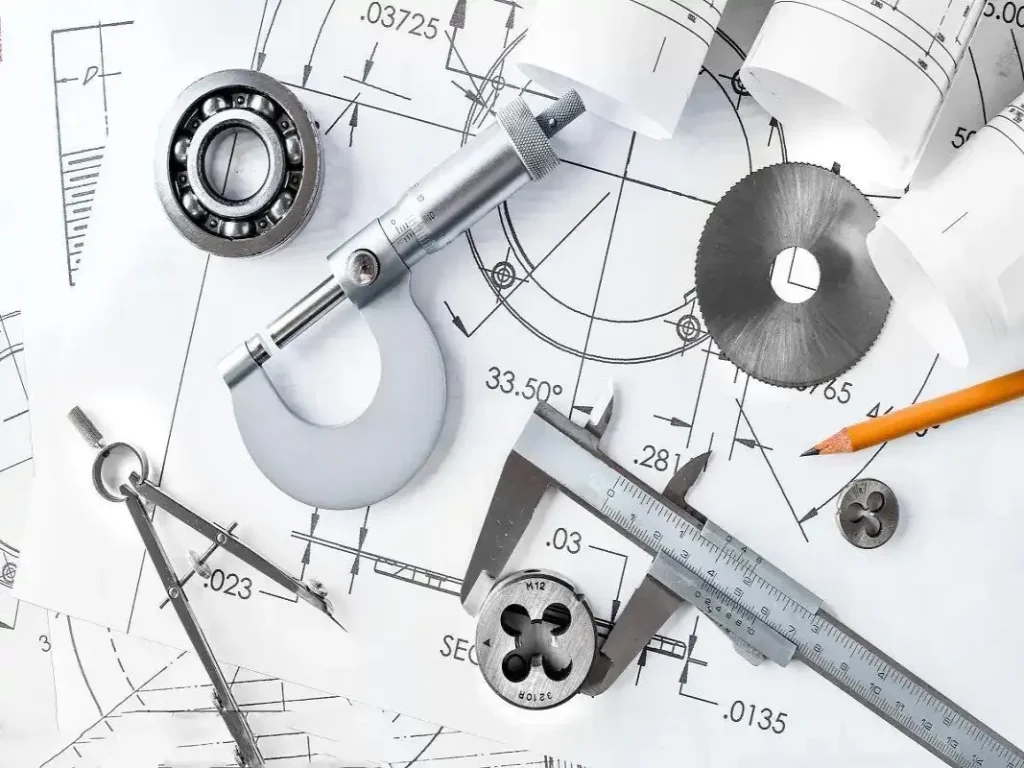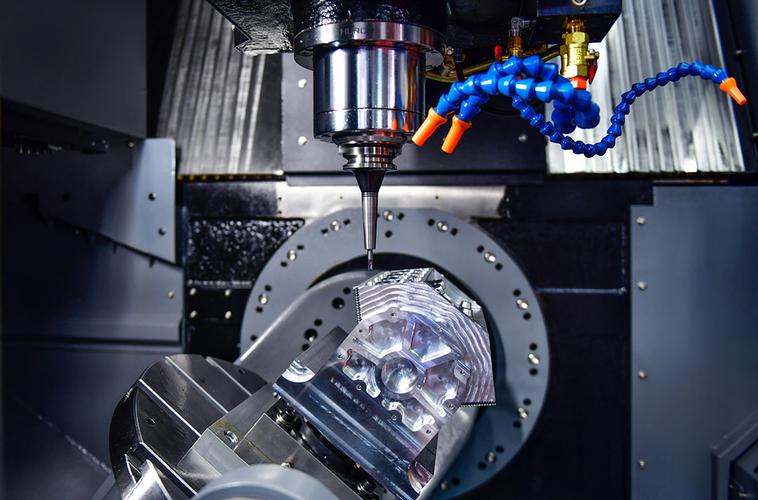
New products and projects keep emerging, with a fast-paced R&D cycle, project timelines are often tightly in nowadays. Engineers and product teams usually need functional parts that can go straight into assembly testing, withstand real-world operating conditions, and validate design feasibility.Low-volume prototype CNC milling is the core process built to deliver exactly that. With no tooling required, flexible minimum order quantities, fast turnaround, it has become the go-to solution for hardware R&D, custom equipment, and low-volume production projects.
Blog of Outline
1.What Is Low-Volume Prototype CNC Milling?
We use 3/4/5-axis CNC milling machines to remove excess material from solid blanks, bar stock, or sheet stock, and accurately replicate your CAD design geometry.
This service is built specifically for prototype validation and bridge production, with standard order volumes ranging from 1 to 100 pieces. You can adjust your design freely between iterations without incurring tooling costs, creating a smooth transition between early concept samples and full-scale production.
2.Why R&D Teams Choose Low-Volume Prototype CNC Milling Process?
2.1 Support for Full-Scope Functional Testing
We machine a wide range of engineering materials, including aluminum 6061/7075, stainless steel 304/316, brass, copper, titanium alloys, carbon steel, POM, PEEK nylon and etc. Parts are machined from a single solid block of raw material. Their performance under load, high temperatures, and wear conditions is identical to that of mass-produced parts.
You can use these prototypes directly for core functional validation, including structural strength testing, seal pressure testing, heat dissipation verification, and vibration fatigue testing to get reliable, real-world test data.
2.2 Consistent Tolerances & Surface Quality for Precision Assembly
CNC milling tolerance meets strict GD&T requirements and delivers controlled surface finishes, with far greater machining consistency than most additive manufacturing methods. Prototype parts can be used directly for high-precision assembly testing, interference checking, and mounting hole alignment verification. They accurately reflect assembly performance at production scale, and prevent design misjudgments caused by low-precision prototypes.
2.3 Blazing Fast Design Iterations
There’s no tooling development or setup required. Once we receive your 3D drawings, we move straight into programming and machining. After running tests, identifying issues, and updating your CAD files, you can get revised prototypes in just a few days.
Our flexible program switching allows teams to complete multiple rounds of design optimization in a short time, significantly accelerating overall R&D progress and helping you bring products to market faster.
2.4 Zero Deviation From Prototype to Production
The machining processes, tooling parameters, and quality standards used in the prototype phase carry over directly to low-volume production. When moving from testing to full manufacturing, there are no dimensional deviations or performance differences caused by process changes, which greatly reduces production ramp-up risk.
2.5 Flexible Order Quantities
We accept single piece custom prototypes and very low-volume orders, so you only need to purchase the exact quantity required for testing and validation. No need to stock extra parts to meet minimum order requirements, which helps control material and cost investment during the R&D phase.
2.6 Lower R&D & Revision Costs
With an MOQ 1 piece and no tooling fees, both upfront development costs and subsequent design revision costs are significantly lower than tooling-based manufacturing methods.
3. Best Choice for
- Part fit and assembly interference validation
- Functional testing for mechanical load, fatigue life, and thermal performance
- Pre-certification samples and customer approval samples
- Pilot runs and market validation before mass production
- Custom replacement spare parts, jigs, fixtures, and tooling
- Low-volume, high-precision part production for aerospace, medical devices, and automation equipment
4.Process Limitations
For very high-volume mass production, CNC milling is usually not the most cost-effective option. Parts with deep undercuts, highly complex organic free-form surfaces, or lattice structures may be better suited to additive manufacturing, die casting, vacuum casting or other processes. We will provide best process recommendations during the review phase to help you choose the optimal solution.
5. Lead Times of CNC Milling Prototyping
Rush orders: Simple parts with as machined surface can be completed in 2–3 business days.
Standard orders: Typically ship in 3–7 business days.
Complex orders: Projects with 5-axis complex features, hard-to-machine materials like titanium alloys, strict GD&T requirements, plus surface finishing/heat treatment request or full CMM inspection reports, Lead time is 7-10 working days or longer.
We will confirm lead times and corresponding solutions during the quotation phase, so you can plan your testing schedule reliably and avoid unexpected delays.
6. DFM for Reduce Costs & Improve Efficiency
Many design have run into the problem of “perfect on paper, but can’t be made, costs too much, or takes too long to produce.” The root cause is almost always a lack of DFM consideration during the design phase.
DFM is our core value-added service. We provide optimization suggestions without compromising part functionality, making your parts easier to machine, lower in cost, and more consistent to deliver.
6.1 DFM Design Tips
Following these guidelines when submitting prototype drawings can significantly improve efficiency and reduce costs:
No. | DFM Design Principle | Tis | Purpose |
1 | Avoid excessively thin wall thickness | Do not design extremely thin side walls | Prevent cutting chatter and avoid part deformation or damage during machining |
2 | Use consistent internal corner radii | Apply uniform fillets at internal corners, with sizes prioritized to match standard end mill diameters | Eliminate the need for custom tooling,reduce costs and lead time |
3 | Minimize deep, narrow cavities | Avoid groove structures with large depth and narrow width as much as possible | Improve chip evacuation and prevent accelerated tool wear |
4 | Reduce the number of setups | Minimize multi-process flip clamping, and adopt unified clamping datums | Reduce positioning errors and manual clamping costs |
5 | Apply tiered tolerance specifications | Assign tight tolerances only to truly critical functional features, and relax non-critical dimensions | Avoid over-machining and control processing costs |
6 | Prepare a complete quotation data package | Provide 3D CAD files in STEP/IGES format, accompanied by 2D engineering drawings with GD&T annotations | Quick get accurate quotations and verify tolerance requirements and machinability |
After you submit your design files, our engineering team will provide a free DFM review with your quote. We identify all DFM issues before machining begins, saving you time and cost from failed prototype builds.
7. Processes of Small batch prototype CNC milling
- Submit your CAD drawings, and specific machining requirements to our team
- Our engineers complete a DFM review and issue a formal quote with lead time details, typically within 24 hours.
- Once the order is confirmed, our process team programs CAM toolpaths and prepares fixturing.
- Proceed CNC milling, with in process dimensional spot checks and quality control.
- Post-processing steps such as deburring, polishing, and surface finishingare completed as required.
- Final inspection is performed, corresponding inspection reports are issued, and parts are packed and shipped to your specified location.
- We provide comprehensive after-sales support and work with you to implement improvements for next full-scale production.
8. Our Advantages of CNC Prototyping Services:
With an expert team and over 100 sets of 3/4/5-axis machining center, we delicate in custom CNC prototype parts services for more than 15yrs. We provide “if no satisfied, redo your order”warranty, We also provide other rapid prototyping services in one stop process, including 3D printing, vacuum casting, rapid tooling, precision die casting, and stamping, we help you smoothly complete low-volume prototype validation and bring your products to market faster and at lower cost.
9. Summary
The core value of low-volume prototype CNC milling is that it solves the common pain points of early product development, low volumes that are hard to source, non-functional prototypes, and high redesign costs, all at production grade quality standards.
No custom tooling, low-volume orders from 1 to 100 pieces can be fulfilled quickly. The solid-blank subtractive machining process guarantees parts have the exact same material properties and precision as production parts, so they can be used directly for assembly validation and functional testing. Our free DFM design support, helping you avoid rework risks and shorten machining cycles and costs.
A reliable rapid CNC milling service is essentially an accelerator for product development. It makes design iterations more efficient, smooths the transition from prototype to production, and ultimately helps you bring products to market with lower costs and faster timelines.
10.Get an Accurate Rapid CNC prototyping Quote & Free DFM Review Today
If you have high-precision, functional low-volume CNC milling prototypes request, submit your CAD files now. Our engineering team will provide a free DFM design review, along with a clear quote and process plan matched to your delivery timeline, to help you bring your product to life fast.
11.FAQs
Q1: How many parts does “low-volume prototype” CNC milling refer to?
Our standard prototype service covers 1 to 100 pieces. We can also create rapid CNC prototyping solutions for larger low-volume production needs.
Q2: What materials are available for prototype machining?
We machine all common metals and engineering plastics, including aluminum, stainless steel, brass, copper, titanium alloys, carbon steel, specialty alloys, POM, PEEK, nylon and etc. For more CNC milling material details, check our CNC machining blog or contact us directly.
Q3: Can you provide official inspection reports for CNC machining prototype parts?
Yes, we can provide CMM coordinate measuring machine inspection reports and FAI documents during CNC machining prototyping
Q4: Can I modify my design and reorder after the first prototypes are made?
Absolutely. Since there’s no permanent tooling involved, you only need to update your CAD files and place an order for the revised prototype for your next round of testing.
Q5: I only have a physical sample, no drawings , can you still machine it? How much does it cost?
You can send us your physical sample. For simple parts, a hand-drawn sketch is also sufficient , you can refer to our beginner’s guide blog post for details. Machining costs anywhere from tens to hundreds or thousands of dollars, depending on part size, quantity, and surface finish requirements.
Share this article